
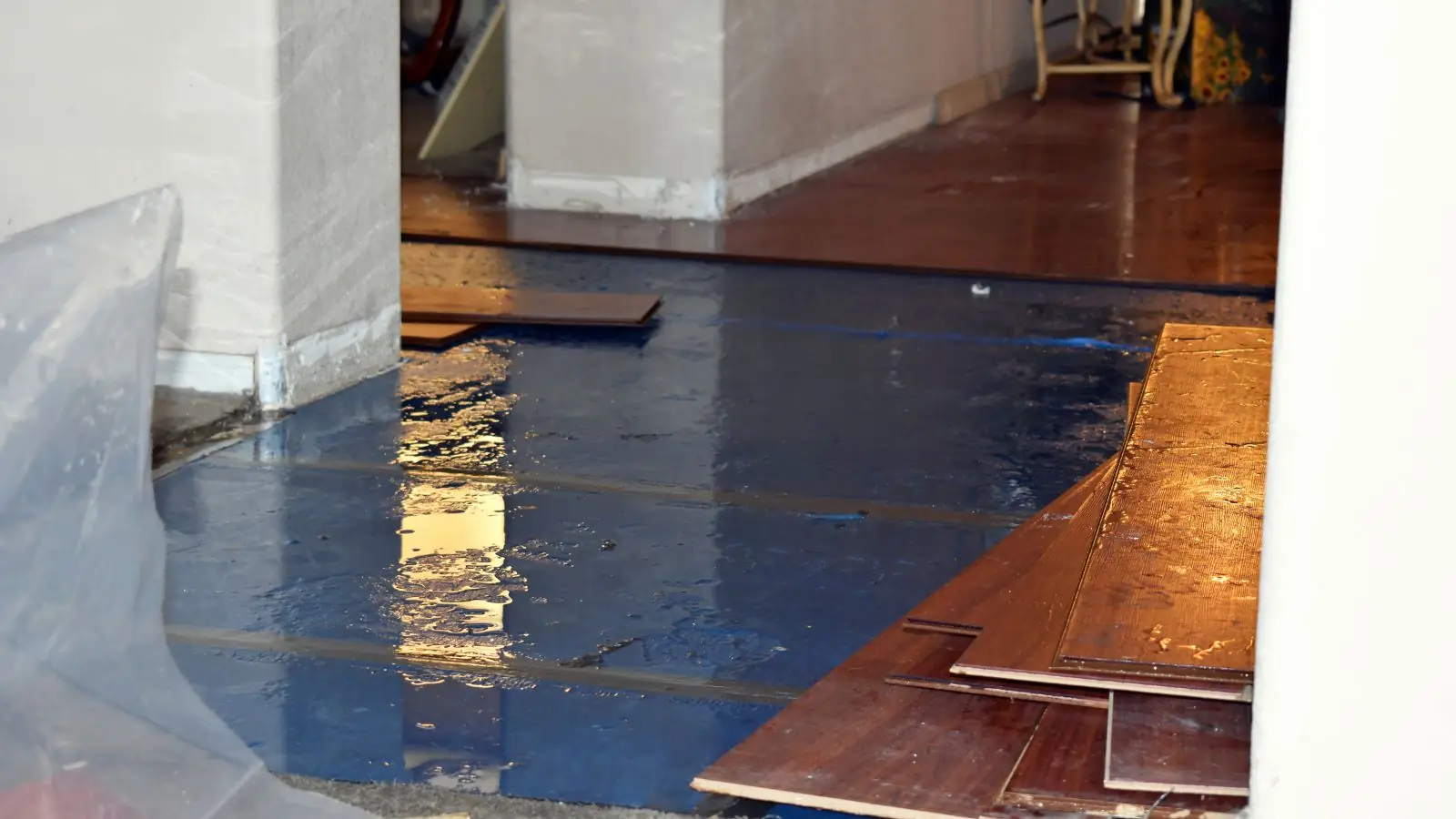
The repair starts with drying, not with sandpaper
Wood takes on water and gives it back slowly. A floor that looks ruined on day two can flatten by day twenty, and a floor that looks fine can still hold moisture in the subfloor. Sanding or sealing before the wood is dry can lock in moisture or leave a floor that warps again.
So the first job is extraction and drying. Surface water comes off with extraction units, then air movers and LGR dehumidifiers work, and some crews add drying mats that pull moisture up through the boards. If the floor is still wet, our water mitigation service handles that stage before any repair is priced.
Waiting for the meter before you decide
A pin or pinless moisture meter gives a reading for each board. Compare those numbers with a board from an unaffected part of the house, such as a closet or another room, and keep taking readings over several days. The floor is ready for repair when readings are close to that reference and stop dropping. The published ANSI/IICRC S500 standard is the reference for drying structural materials, which is why a meter reading comes before any sanding.
Subfloor readings matter as much as the boards. Wet plywood or concrete under a floor will push moisture back into new wood. If the subfloor stays high, the repair waits.
Plan on days to weeks, not hours. Rushing the schedule is the most common reason a repaired floor cups a second time.
Floor still wet or just flattened out?
Call the 24/7 line. We can tell you what readings to look for before any repair is chosen.
Reseda's mid-century housing stock and the permit question for floor repairs
LA City Planning counts 39.2 percent of housing units across this plan area as built between 1950 and 1959, the largest single decade. If your home is from that era and still has its original solid boards, a refinish is often possible, but a newer floating or engineered floor behaves differently. Find out what you own before choosing a path.
LADBS says permits and inspections are required by law for construction on a home, with plumbing, electrical and heating work needing separate permits. The Express Permit list also has an entry for modest water damage repairs, defined by a 10 percent share of replacement cost. Ask LADBS or your contractor whether your floor repair qualifies, instead of assuming no permit is needed.
If your property lies in a flood hazard area, LADBS bulletins treat repairs that reach half of a structure's market value as a substantial improvement, which brings full compliance. Check the FEMA flood map for your address before a big floor-and-subfloor job.
Sources: LA City Planning, Reseda and West Van Nuys demographic profile, LADBS Homeowners Guide to Permits and Inspections, LADBS Express Permits information bulletin, LADBS flood hazard bulletin, FEMA Flood Map Service Center, California Department of Insurance, residential property claims
Refinish, patch or replace
| Path | When it fits | Honest limits |
|---|---|---|
| Sand and refinish | Boards have flattened, surface staining is shallow and readings are normal | Cannot fix deep black stains, split boards or an engineered floor with a thin top layer |
| Replace individual boards | Damage is limited to a few boards or one area | New boards will not match aged color on day one, so expect blending and a finish coat across the room |
| Replace a full section | Damage spans a room or a run from wall to wall | Seams where the old floor meets the new may show unless they fall at a doorway |
| Replace the whole floor | Boards are delaminated, mold is under the floor, or the subfloor has to come out | Highest effort, and matching a continuous floor across rooms may mean more rooms than the wet ones |
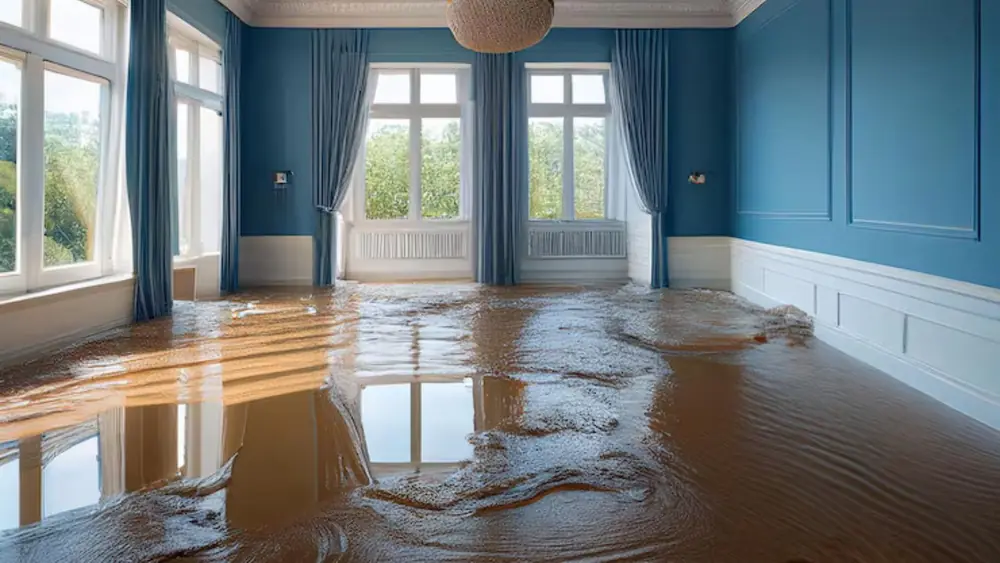
How a board replacement is done
Cut and lift
The damaged boards are cut out along a line, leaving the surrounding floor intact.
Check underneath
The subfloor is inspected for swelling, staining and soft spots, and dried or replaced as needed.
Weave in new boards
Replacement boards of the same species and width are nailed or glued in, then staggered into the existing pattern.
Sand and stain
The patched area is sanded flush and stained, and the finish is carried across a larger area so repair lines do not show.
Cure
The finish needs time to cure before furniture returns, and the manufacturer's directions set that time.
When a wood floor cannot be saved
Some floors do not recover. Engineered planks have a limited layer of real wood on top, and a thin layer can be sanded only so far. Boards that have delaminated, or that show black staining deep in the grain, usually need replacement.
A floor that sat wet long enough to grow mold will need more than a patch. That is a case for water damage repair paired with remediation of whatever is below. Not every floor is worth the cost of rescuing it, and we will say so.
Costs for a floor repair come down to square footage, wood species, how many rooms must blend, whether the subfloor needs work and how much finish has to be carried across the room. Ask for those items in writing so two quotes can be compared line by line. A cheap patch that has to be redone after a second cupping is not cheap.
If you are also thinking about stopping water from entering again, note that restoration is not waterproofing. Fixing the floor does not fix the leaking window, the grading outside or the supply line that caused the damage, so make sure the source has been repaired by the right trade.
Property owners in Woodland Hills and Encino ask us this often, and the answer is the same: take readings before you commit to a path.
Insurance and photos before anything comes up
Photograph the floor before any board is pulled, and keep a record of readings. Before you commit to a rebuild, the California Department of Insurance wants the adjuster to see the damage first. It also advises keeping receipts for temporary repairs and holding on to damaged items until told otherwise. Gradual leaks and neglect are often excluded, so check your policy.
Frequently Asked Questions
My Reseda home dates from the 1950s. Can the original floors be refinished after water damage?
Often, if they are solid wood and have dried fully, because solid boards can be sanded several times. Check that the boards are solid and not a thin veneer before anyone sands.
How long should I wait before sanding?
Wait until readings across the floor and the subfloor are normal and stable, which can take days to weeks. Your drying log is the evidence.
Can a cupped floor flatten on its own?
Sometimes, as it dries slowly with the moisture controlled. Do not sand until it has settled.
Will new boards match the old ones?
Not exactly at first. Aged wood has a different tone, so expect blending and a finish applied across a wider area.
Is a permit needed for a floor repair?
It depends on the scope. Check with LADBS, since some repairs qualify for an Express Permit and plumbing or electrical work needs separate permits.
Water still spreading? Call the 24/7 line at (818) 337-2642.