
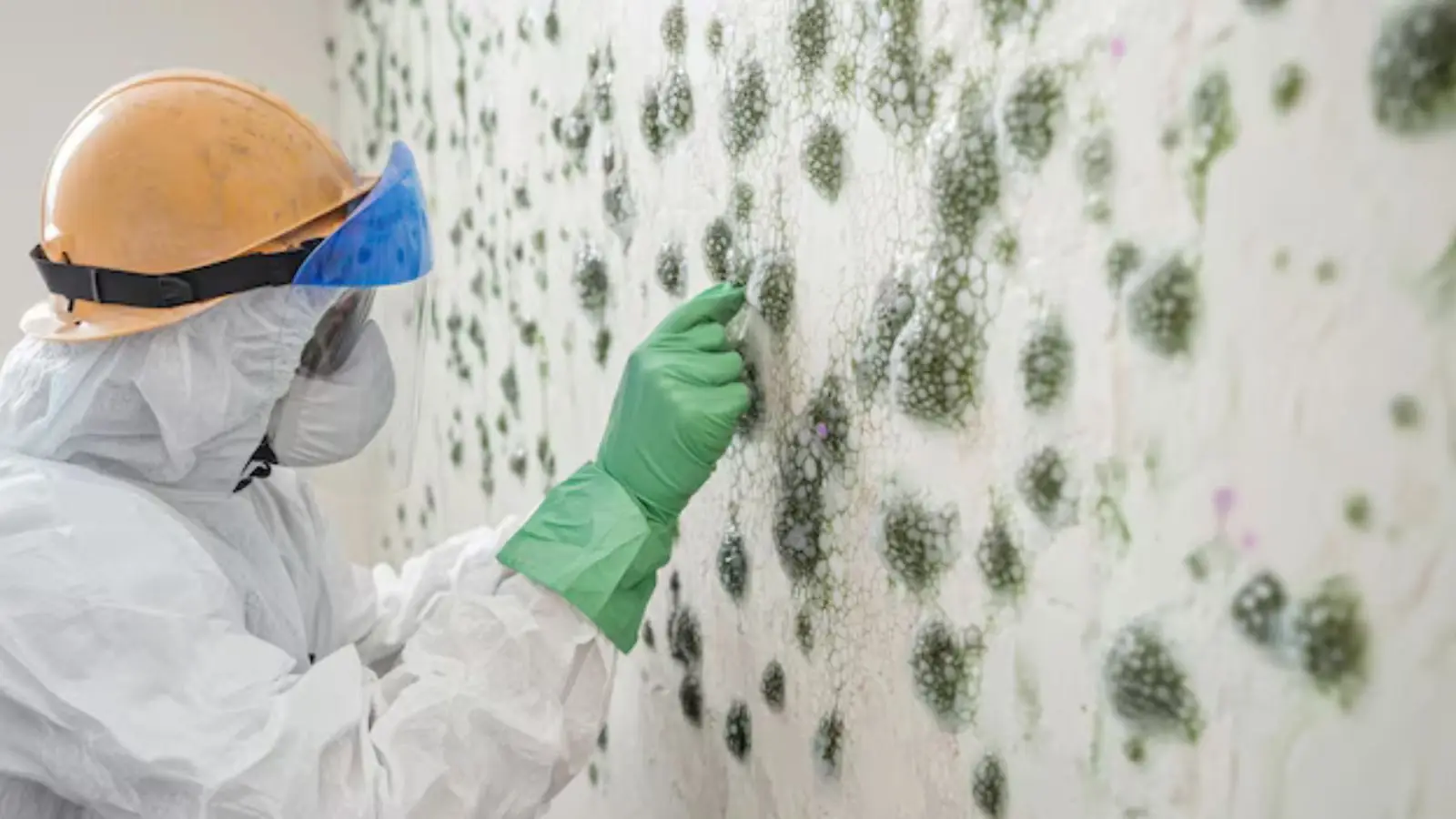
What Wall Fungus Is and Why It Appears
To remove fungus from a wall, you first have to know that mold is a type of fungus and that it needs moisture to grow. Drywall paper, wood framing and paint films give it food. A leak, condensation or high humidity supplies the water.
That is why scrubbing alone rarely settles a wall problem. If the damp source keeps feeding the surface, the patch returns to the same spot. The EPA guide on mold cleanup says plainly that the water problem has to be fixed first.
Health questions, including whether a particular patch affects someone in your home, belong with a physician. This page covers materials and process only.
Clean It, Cut It Out, or Call a Crew
A patch the size of a 3 foot square or smaller is where EPA lets occupants do the cleaning, and anything bigger falls under its remediation guidance. The table adds the wall material, which changes the answer.
| Situation | Likely path | Why |
|---|---|---|
| Under about 10 sq ft on painted, sealed drywall, source already fixed | Occupant cleaning per EPA, with protection | Small, on a hard surface, with the moisture gone |
| Same size but the drywall is soft, crumbly or stained through | Cut out and replace the section | Drywall is porous, and CDPH says that kind of material seldom cleans up well |
| Over about 10 sq ft, or in several rooms | Professional remediation | Containment and air filtration are needed |
| Growth keeps returning to the same wall | Find the hidden source first | Pipe, roof, window or ventilation problem is still active |
| Wall was soaked by sewage or contaminated water | Professional cleanup only | EPA says to hire a professional for sewage damage |
Patch bigger than a doormat?
Call the 24/7 line and describe it. We will explain how an inspection works and what a written remediation scope includes.
Reseda Renters, Landlords and Wall Mold
Renters make up 46.2 percent of households and multi-unit buildings hold 42.9 percent of housing, based on the city's planning department figures for the wider area. That is the plan area, not Reseda alone, but it means many readers deal with a landlord as well as a wall. In practical terms, a tenant should put the problem in writing and keep copies.
Tenants get this advice from the state Attorney General's office: put repair requests in writing, hold on to copies and photos, and take unresolved problems to local code enforcement. The same tenant sheet counts visible mold and dampness among the hazards a landlord must deal with. Civil Code 1941.7 (SB 655) ties the landlord's mold repair duty to notice, which gives your written letter legal weight.
Within the City of Los Angeles, the Housing Department's main line is 1-866-557-7368, where a Report a code violation menu choice handles unsafe or unhealthy apartment buildings. If your landlord does not respond after written notice, that is the next place to look.
Sources: California Attorney General habitability sheet, SB 655 bill text, LAHD file a complaint, City Planning Reseda profile, EPA mold cleanup in your home
Protect Yourself and the Rest of the House
EPA guidance calls for an N-95 respirator, gloves and goggles during mold cleanup. Close the door of the room, turn off any fan that would blow across the patch, and do not run an HVAC system you suspect is contaminated.
Do not dry-scrub or sand. Disturbing a patch spreads particles through the air and onto nearby surfaces. A damp wipe on a hard surface is gentler than abrasion.
Take photos of the wall and of any nearby water stains before you do anything. They help with an insurance conversation or a landlord notice.
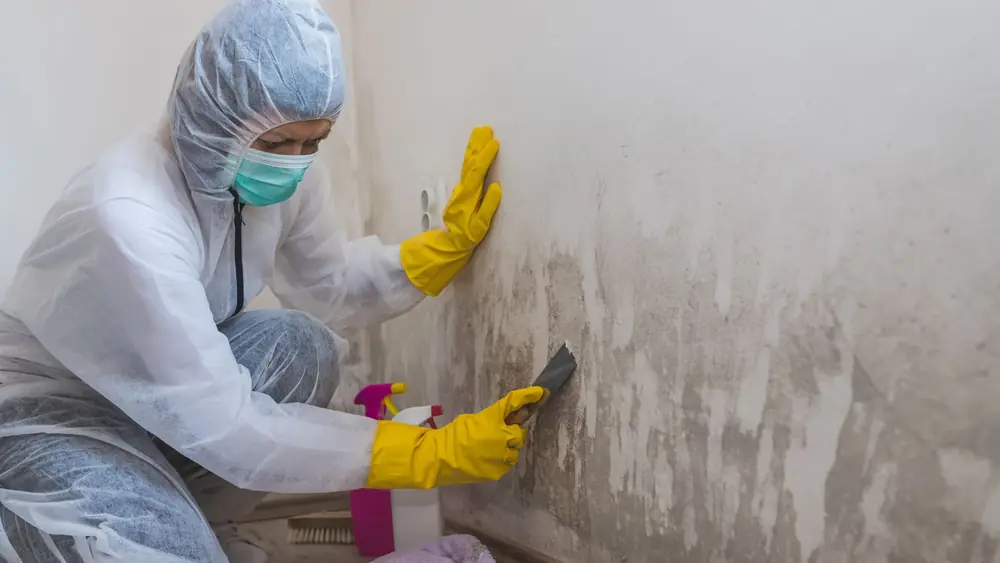
Trace the Moisture Behind the Wall
Plumbing wall
Bathroom, kitchen and laundry walls hide supply lines and drains. A slow drip may only show up as a stain.
Exterior wall
Window frames, stucco cracks and failed flashing let rain in. Look for staining that follows a window or roofline.
Cold corner
Where an exterior wall meets a ceiling, cool surfaces collect condensation if the room is humid and poorly ventilated.
Behind furniture
Couches and dressers pushed tight to a wall trap damp air against it. Pull pieces a few inches out and check for patches.
A moisture meter and a thermal imaging camera help here. The meter gives a number for the drywall, and the camera shows temperature patterns that point to wet cavities. A cheap hygrometer is worth buying because EPA wants indoor humidity held under 60 percent, with 30 to 50 percent as the ideal band.
Painting Over It Is Not a Fix
EPA says not to paint over mold. Paint hides the surface and traps moisture behind a film, and the patch can grow through a fresh coat. Stain-blocking primer does not repair a wall that is still wet.
When drywall has to come out, a crew sets up containment with plastic sheeting, runs a HEPA air scrubber, removes the affected panel plus a margin of clean material, and bags it before carrying it out. Framing is cleaned and dried to a measured reading. Then water damage repair crews replace insulation, board, texture and paint.
Remediation follows the ANSI/IICRC S520 standard for mold. Ask each bidder if its crews follow it, and request a written scope that names the area, the method and the finishing steps.
Do You Need a Test First?
If the mold is already visible or has a smell, CDPH advises skipping the test, since the answer will not change what you do. A test can still serve a purpose after remediation, when an independent assessor checks the work. That assessor should be separate from the company doing the cleaning.
For wall patches that reappear, a leak survey by a plumber or roofer is often more useful than lab results. Once the source is fixed, mold remediation can address what is already on the materials. Crews serving neighboring Woodland Hills and Winnetka work the same way.
Frequently Asked Questions
I rent in Reseda and see growth on my bedroom wall. Who pays to fix it?
Notify your landlord in writing with photos. California law treats visible mold as a habitability issue, and the landlord's repair duty begins after notice. Questions about who bears the cost should go to the landlord, the LA Housing Department or a tenant attorney.
Can I use a household cleaner and call it done?
Only for a small patch on a hard, sealed surface after the moisture is gone. Soft drywall, repeat patches and anything beyond about 10 square feet call for a closer look.
Is a black spot on the wall always mold?
No. Soot, dirt, dye transfer and water stains can look similar. A trained inspector can tell you more. We do not diagnose from photos.
Will fresh paint stop it?
No. Paint covers the surface but not the cause. Dry the wall, fix the source, remove affected material and then paint.
How long does a wall remediation take?
It depends on size, containment needs and drying. Your written scope should list the steps so you can see what is included before work starts.
Water still spreading? Call the 24/7 line at (818) 337-2642.