
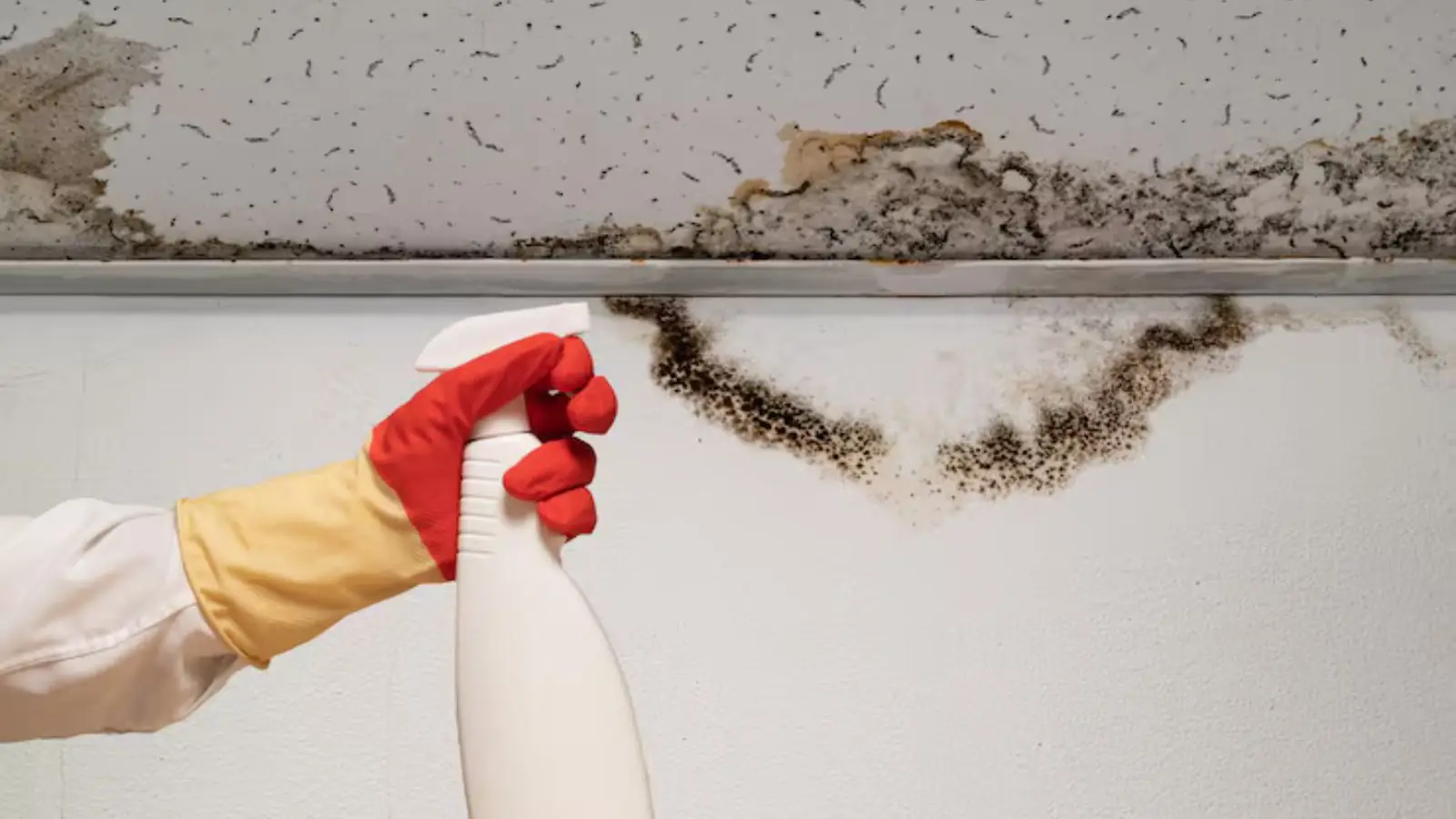
About the health question in the title
People search this because they want to know whether to worry. Whether mold affects a particular person is a medical question, and a physician is the right person to ask. We cannot diagnose or assess health effects, and we do not identify a mold species by its color.
What we can address is the building. Mold on a ceiling means a ceiling that has been or still is damp, and the moisture source is what decides the plan. The rest of this guide is about that source and the practical next move.
Where ceiling moisture comes from
Roof or flashing leak
Rain finds a gap around a vent pipe or a lifted shingle, travels along framing and shows up as a stain far from the entry point.
Bathroom fan venting into the attic
A fan that dumps warm, wet air into the attic instead of outdoors wets insulation and the ceiling drywall below it.
AC condensate line or drain pan
A clogged line or overflowing pan above the ceiling drips for weeks, often unnoticed until a stain appears.
Upstairs plumbing or a tub overflow
In a condo or two-story house, a supply line, shower pan or toilet seal above can feed the ceiling below.
Condensation on a cold surface
Poorly insulated areas and ducts can sweat and leave dark growth in corners and along edges.
Callers often mention a recent leak from a toilet, sink, AC condensate line, roof or siding. When that is the case, the leak is the first repair. Mold removal before the fix means the ceiling gets wet again.
Dark spots overhead and a recent leak?
Call the 24/7 line. Tell us about the leak, the room above and how big the patch is, and we will explain the next steps.
Ceiling mold in Reseda rentals: notice, habitability and who to contact
Nearly half of occupied homes here, 46.2 percent, are rentals in the city's demographic numbers for the area. For a renter, a ceiling leak from an upstairs unit or a roof is often the landlord's repair, so the first step is written notice with photos.
Under California Civil Code 1941.7 (SB 655), a landlord's duty to fix a mold condition starts once the tenant gives notice. The Attorney General's tenant sheet adds that tenants should request repairs in writing, keep copies and photos, and that retaliation is prohibited. Send the notice, keep a copy and note the date.
The Los Angeles Housing Department takes city apartment complaints on 1-866-557-7368 and offers a Report a code violation option for hazardous or unhealthy units. If a notice goes unanswered, that is a documented place to take it.
Sources: LA City Planning, Reseda and West Van Nuys demographic profile, SB 655 (2015), California Legislature, California Attorney General, Know Your Rights: Habitability, Los Angeles Housing Department, file a complaint, CDPH, Frequently asked questions about mold, EPA, Mold cleanup in your home, EPA, Brief guide to mold, moisture and your home
What to do in the first hour
Stop active water
If water is dripping now, close the main valve if it is plumbing, place a bucket and move belongings. Cut power to the room only if the panel is dry and reachable.
Keep the area undisturbed
Turn off ceiling fans and avoid brushing or poking the patch. Disturbing mold puts spores into the room air.
Photograph and measure
Take wide and close photos with a tape measure in the frame. Note dates and any storms or fixtures used above.
Hold the HVAC
EPA advises not running an HVAC system you suspect is contaminated with mold, so switch it off if the vents are near the patch.
Call for an assessment
If water is still entering, call a plumber or roofer for the source and the 24/7 line for the ceiling.
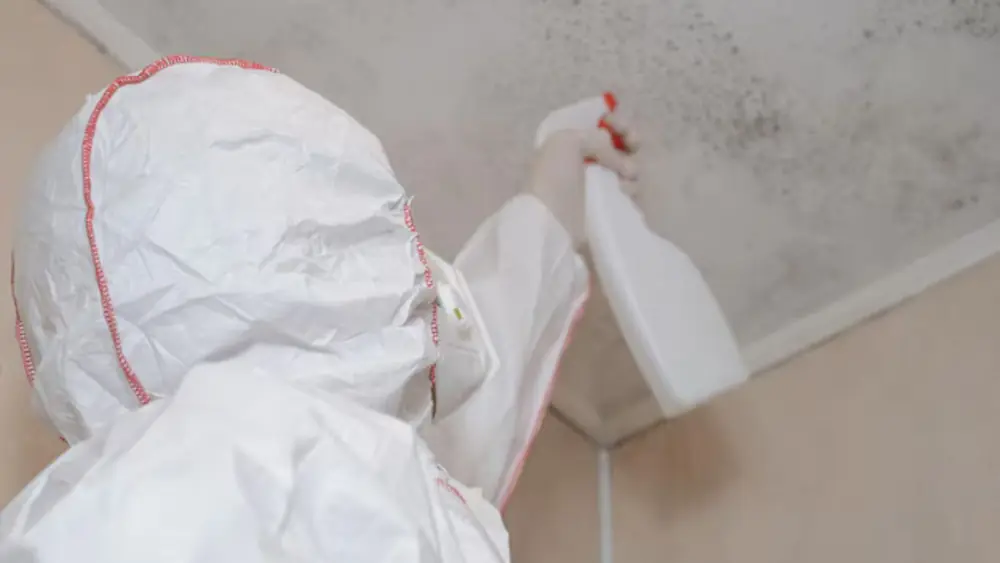
What not to do on a moldy ceiling
Do not paint over it. EPA is direct on this point, and a coat of paint on a damp ceiling hides the problem and holds moisture in. Stain-blocking primer is for after the water is fixed and the area is dry, and even then it is a finish, not a treatment.
Do not scrub dry or spray bleach on drywall. Scrubbing releases spores, and bleach on a porous surface does not reach the growth below. Per CDPH, a porous board like drywall rarely cleans up well, so ceiling drywall is often cut out and replaced.
Do not climb into an attic with a mold patch below and wet insulation above. Insulation can hold moisture and hide electrical hazards, and this is the point where an assessment is cheaper than a mistake.
When the patch is small and when it is not
Size decides who does the work. EPA's guidance lets occupants clean a small patch (a bit under 10 square feet) and treats larger areas differently. Ceilings are awkward because the visible patch is often smaller than the wet area behind it. A moisture meter and a thermal imaging camera show how far it goes.
Sampling a ceiling that visibly has mold on it is not what CDPH recommends. After removal, independent clearance testing is more useful, since a separate assessor checks the result against the written scope.
If an area is larger, keeps returning or sits near the attic, a contained cleanup under S520 is the path. Our mold remediation team uses containment and HEPA air scrubbers, and then rebuilds the ceiling through water damage repair once the area is dry.
The same ceiling problem in neighboring areas
Roof and attic leaks are not tied to a single street. We get ceiling calls from homeowners in Northridge and condo residents around Tarzana, and the first questions are always the same: where is the water, and is it still coming?
Frequently Asked Questions
I rent in Reseda and my landlord has not fixed a ceiling leak. Who do I contact?
Send written notice with photos first and keep a copy. If nothing happens, the Los Angeles Housing Department is where unsafe apartment conditions inside city limits get reported.
Can I just wipe it off?
Occupants can usually clean small areas, below about 10 square feet by EPA's measure, with an N-95 respirator, gloves and goggles. Fix the moisture first, because cleaning a wet ceiling only buys time.
Does a stain always mean mold?
No. A brown ring can be old water with no growth. Color alone cannot identify mold, so a meter reading and the leak history matter more.
Should I test before removal?
Skip the pre-cleanup test if you can already see or smell mold, which is CDPH's position. Independent clearance testing after the work is the better use of a testing budget.
Do you also rebuild the ceiling?
Yes, drywall replacement, texture and paint are part of repair once the area is dry and the source is fixed.
Water still spreading? Call the 24/7 line at (818) 337-2642.