
Fix the Water Before You Fix the Ceiling
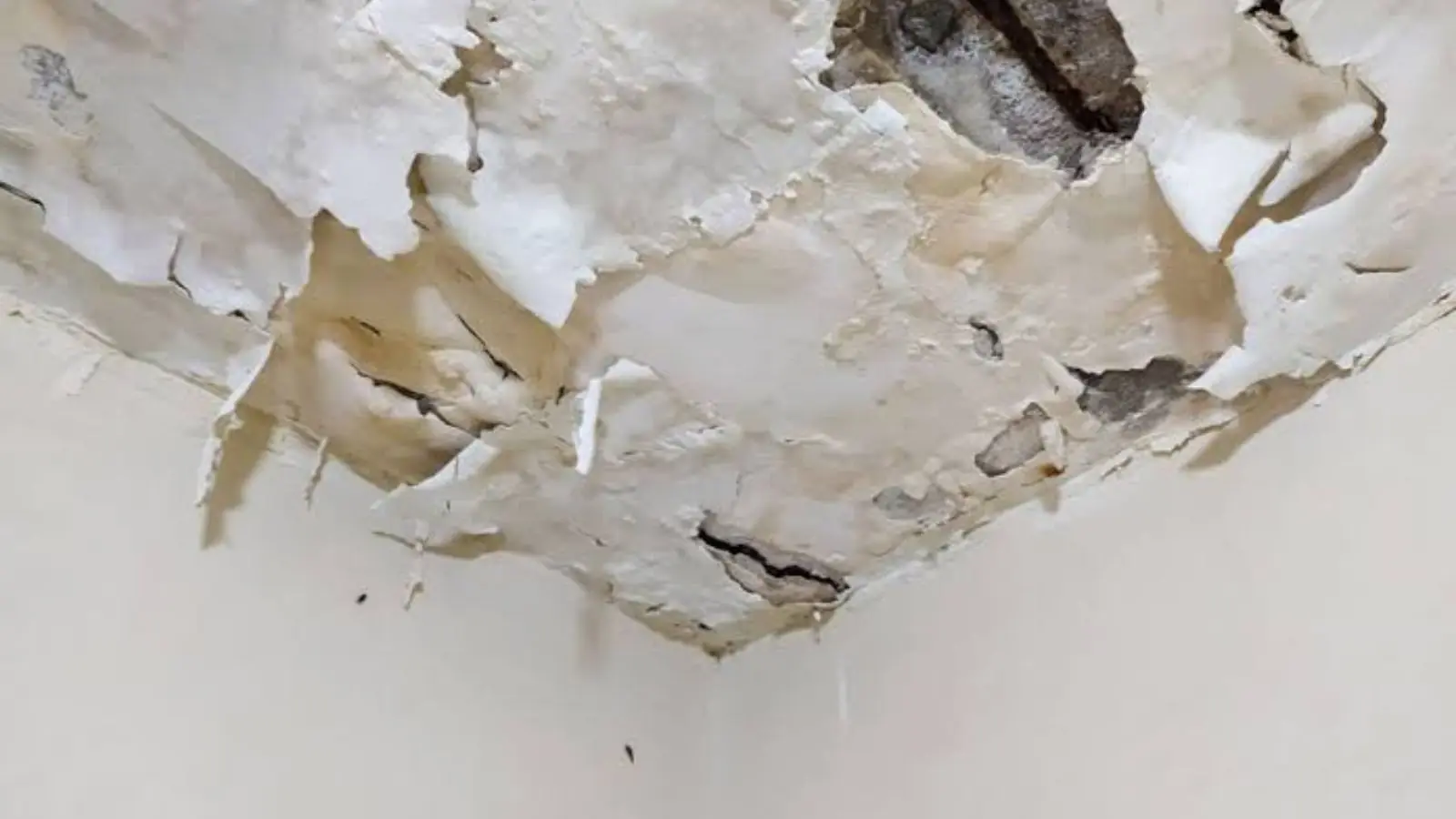
A brown ring on drywall is the visible end of a story that began somewhere above it. Water damage on ceiling repair goes wrong most often because the patch goes up before the source is found, so the stain comes back after the next storm or the next shower.
The working order is simple. Stop the water, dry the cavity, cut out what cannot be saved, rebuild, then finish the surface. Skip a step and a quick drywall job becomes a second repair a few months later.
If water is dripping right now, set a bucket, move furniture clear, and call the 24/7 line. The rest of this guide can wait.
Stain, Sag or Collapse: What the Ceiling Is Telling You
How the ceiling looks decides how urgent the job is and how much of it has to come out. Use this table as a first read, then confirm with a moisture meter.
| What you see | What is usually happening | Typical response |
|---|---|---|
| Flat brown ring, dry to the touch | An old leak that stopped, or a very slow seep | Find the source, take meter readings, block the stain and repaint |
| Ring with a soft or cool spot | Drywall paper is still holding water | Dry the area or cut out the wet section, then replace |
| Bubble or bulge under the paint | Water has pooled on the back of the board | Drain into a bucket through a small hole at the lowest point, then plan removal |
| Sag across the panel or cracked seams | The board has lost strength | Keep people out from under it and have it taken down |
| Section already on the floor | Collapse, often with wet insulation above | Treat as an emergency, stay clear and call |
Ceiling still dripping or bulging?
Stop the source if you can, set a bucket, and call the 24/7 line. We will talk you through the next steps while a crew is lined up.
Reseda Ceilings: Older Homes and What LADBS Lists for Repairs
The decade with the most construction was 1950 to 1959, at 39.2 percent of homes, in the latest LA City Planning demographic profile for this area. An earlier edition put about 47.8 percent of units before 1960. Both cover the whole plan area, not Reseda alone.
Decades of repainting and patching mean texture matching takes more care, and an old-looking stain still deserves a meter reading before you cover it.
For ceiling work, the LADBS Express Permit bulletin is the page to read. It covers small drywall jobs that add no walls and also water repairs that stay under a set share of replacement cost. Skipping plan check does not skip the permit.
LADBS also says plumbing and electrical work need their own permits. Before anyone opens a ceiling beyond a patch, ask whether a permit applies, and check with LADBS by dialing 3-1-1.
Sources: City Planning: Reseda - West Van Nuys demographic profile (ACS 2020-2024), City Planning: Reseda - West Van Nuys demographic profile (ACS 2017-2021), LADBS Express Permits information bulletin, LADBS Homeowners Guide to Permits and Inspections
The Ceiling Repair Sequence, Start to Finish
Stop the source
Shut off the main water valve if a supply line or fixture above is the cause. For a roof or AC condensate line leak, get the source tarped or shut down and logged before anything else gets built.
Open it up and dry it
A technician checks the board and framing with a moisture meter and a thermal imaging camera, removes saturated insulation, then sets air movers and an LGR dehumidifier. This is the structural drying work that has to finish before repair starts.
Cut out the wet board
The opening is cut square and extended to the nearest joist so the new piece has something to screw into. Cutting only to the edge of the stain leaves wet board behind.
Hang, tape and coat
New drywall goes in, seams are taped, and joint compound is applied in thin coats with sanding between each one. Thick single coats crack as they dry.
Seal, texture and paint
A stain-blocking primer goes on first, texture is matched to the surrounding ceiling, and the finish coat runs wall to wall across the ceiling plane.
Why the Paint Step Decides Whether the Stain Returns
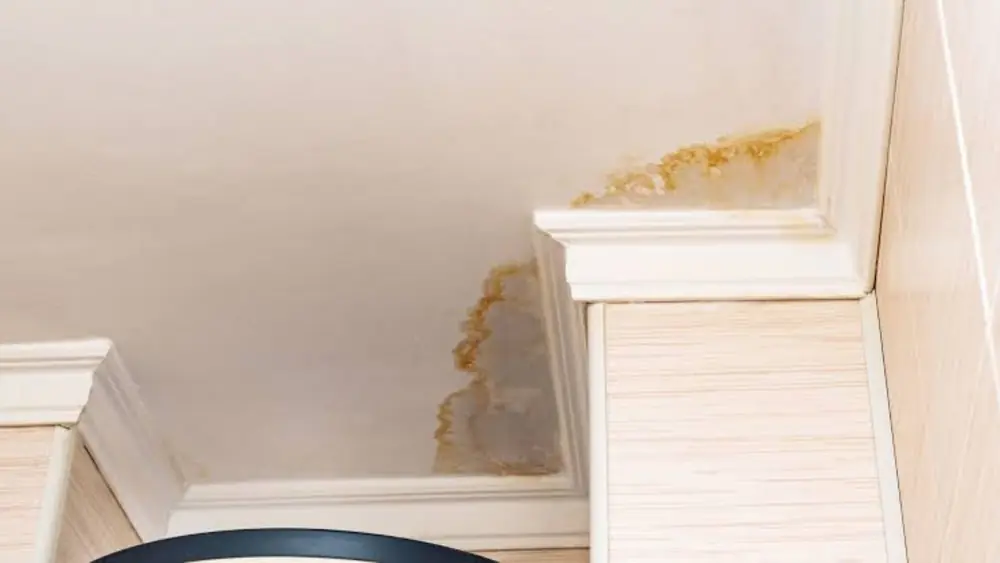
Ordinary latex paint lets brown water stains bleed through within days. A stain-blocking primer, usually oil-based or shellac-based, locks the discoloration in so the finish coat stays white. It is also the step most often skipped on a rushed job.
Texture is the second giveaway. Knockdown, orange peel and heavier spray textures each have a pattern, and a mismatched patch shows in side light. Test a small area and look at it from the doorway.
Paint the whole ceiling, corner to corner, rather than a single circle. Spot painting leaves a halo because the new coat sits differently from the aged paint around it.
What a Restoration Crew Adds to a Patch Job
A handyman can hang drywall. A restoration crew also proves the structure is dry before anything is closed up, which matters if the insurer asks questions later.
Moisture map
Meter readings taken on a grid across the ceiling, walls and framing, so wet pockets are not guessed at.
Drying log
Daily readings showing the structure moving toward dry, the record that tells you when it is safe to close up.
Photo record
Pictures of the stain, the opened cavity and the wet materials, handy for an insurance claim.
Written scope
What is being removed, what is being rebuilt and how the work is priced, explained before work begins.
The rebuild itself falls under water damage repair, which covers drywall, insulation, texture and paint once the drying is signed off.
When a Ceiling Job Is No Longer a DIY Job
A single dry stain smaller than a dinner plate is a reasonable weekend project once the leak is fixed. Anything bigger, softer or repeated deserves a professional look.
- The stain has grown, even slowly, since you first noticed it.
- The board feels soft, sags, or has cracked seams.
- Water came through a light fixture, fan or recessed can.
- The same spot has stained before and been painted over.
- More than one panel is affected, or the room above is a bathroom or unit you do not control.
Water near ceiling lights or wiring
Do not touch a fixture that is dripping or wet. A wet floor between you and the breaker box means leaving it alone. When the box is dry and easy to reach, switch off the circuit for that room. Sparks, a burning smell or a blocked path to the box mean you call 911 or your electric utility before you call a restoration crew.
If you live across the line in Winnetka or Northridge, the same sequence applies, and crews from our Reseda base cover both.
Frequently Asked Questions
Does a 1950s Reseda house need a different approach to ceiling repair?
City Planning data shows the largest share of homes in the Reseda area went up in the 1950s. Age itself does not change the sequence, but it changes the finish work. Layers of old paint and patched texture make matching harder. Ask your contractor about the finish work before it starts.
Can I paint over a ceiling water stain?
Not with ordinary paint. The stain bleeds through, and covering it hides a problem you still need to check. Confirm the area is dry with a moisture meter, fix the source, then use a stain-blocking primer before the finish coat.
Should I poke a hole in a bulging ceiling?
Often yes, if the bulge is full of water and you can place a bucket under the lowest point. A small hole lets it drain in a controlled way instead of letting the panel fall. Keep clear of light fixtures and wiring, and expect the board to be removed afterward.
How soon should a wet ceiling be dried?
Mold prevention depends on the ceiling and framing drying out within roughly two days, per EPA. Call as soon as you see water, because the cavity above the ceiling dries slower than the surface does.
Will insurance cover a water-damaged ceiling?
Sudden and accidental leaks are often covered, while gradual leaks and long-neglected roof or plumbing problems often are not. Read your policy, photograph everything before work starts, and ask your insurer how your loss is classified.
Water still spreading? Call the 24/7 line at (818) 337-2642.