
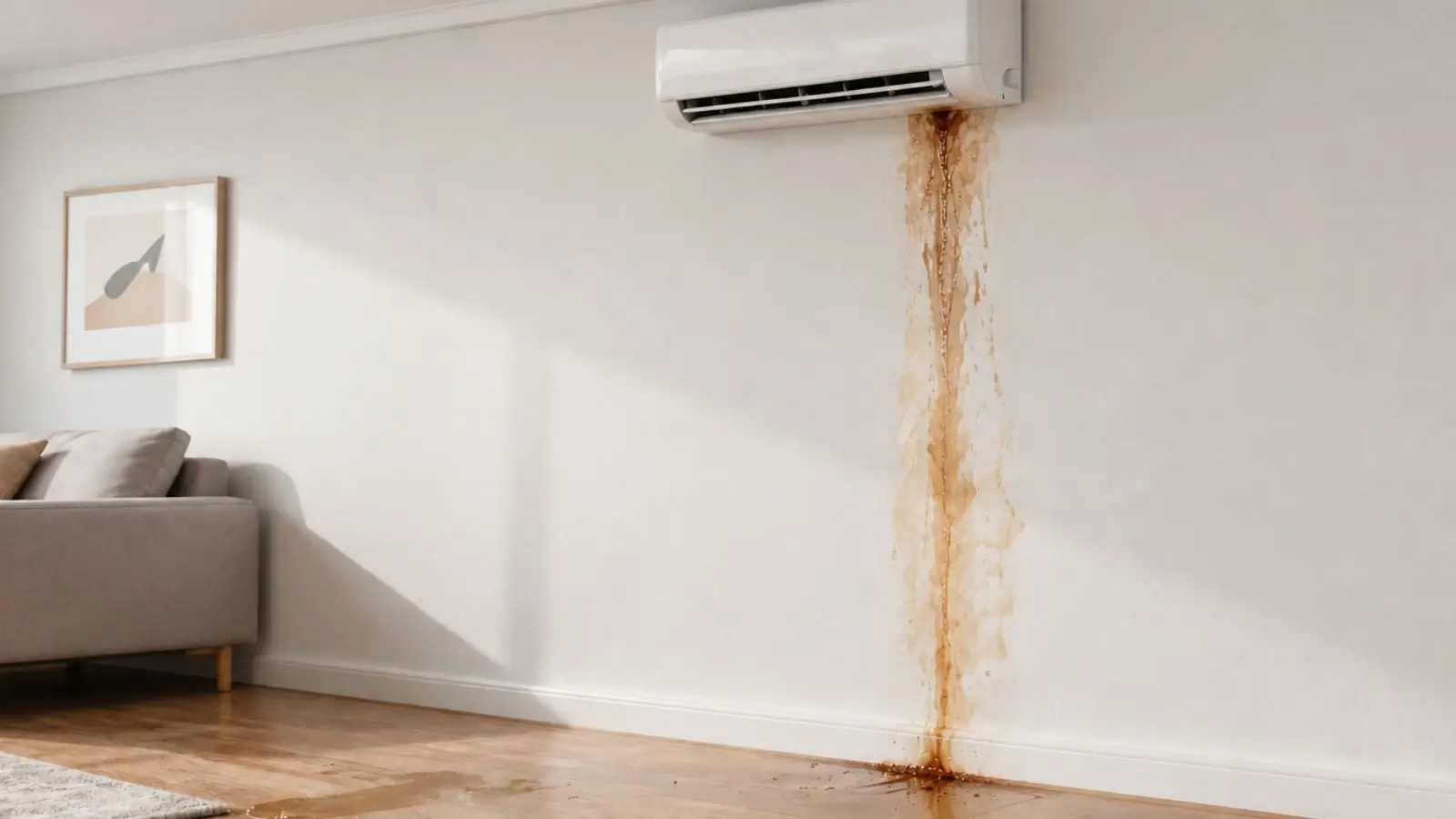
AC leak water damage in a hot-summer valley
AC leak water damage is moisture from a cooling system that escapes into walls, ceilings, floors or an attic. A running air conditioner pulls water out of the air as it cools, and that condensate is supposed to leave through a drain line. When the line clogs, the pan cracks or the unit is installed out of level, the water goes where it should not.
Reseda summers are long and dry. Van Nuys Airport's NOAA normals put every month from June through September at 0.12 inches of rain or less, and July at none. So a wet ceiling in August is rarely a roof problem. In the cooling season, look at the air conditioner, a water line or an upstairs neighbor before you call a roofer.
Condensate lines, drain pans and ductless units
Clogged condensate drain line
Algae and dust build slime in the line until the water backs up and spills at the air handler. It is the most common cause, and the overflow often shows up in a closet, garage or attic.
Cracked or rusted drain pan
The secondary pan under an older air handler can corrode through. Water then drips to the ceiling or floor below.
Ductless mini-split drips
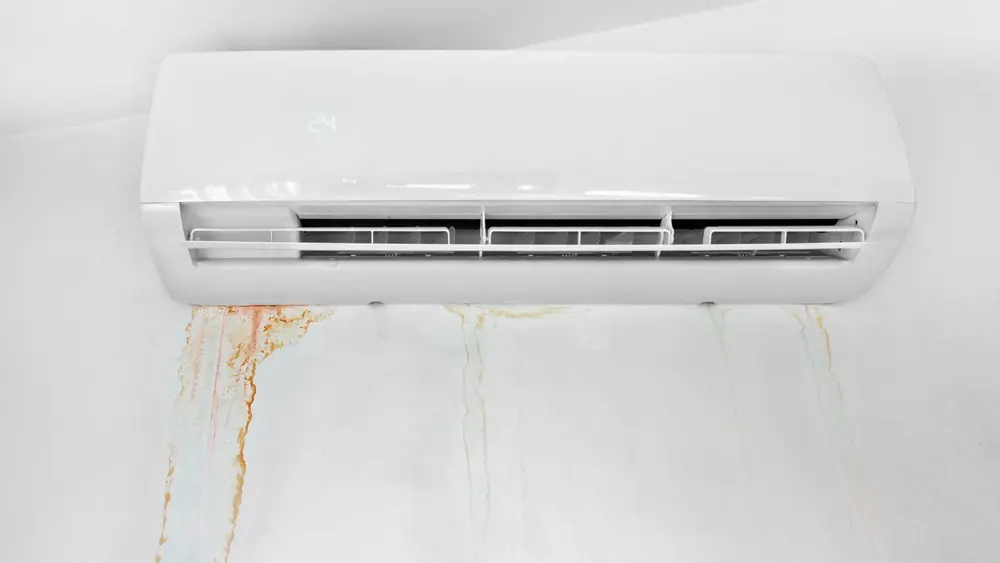
A wall unit that is tilted wrong or has a kinked drain hose can drip down the wall behind it. The water runs inside the drywall.
Frozen coil melting
Ice on the evaporator coil melts when the system shuts off and overflows the pan. A technician must find out why it froze.
Where the equipment sits varies by property. Some homes have an air handler in an attic, some in a closet or garage, and some units serve a condo from a ceiling space. Check where yours is before the next hot week.
Wet ceiling and the AC is running?
Turn the system off at the thermostat, then call. Describe where the unit sits and what you see, and we will tell you what the drying job likely involves.
First steps and safety around an AC leak
Water and wiring share the same space
Turn the system off at the thermostat first. Then cut its breaker, but only when the panel sits in a dry spot you can get to safely. Air handlers contain electrical parts, so do not touch a wet unit or stand in water near it. If a light fixture holds water or a ceiling bulges, stay out from under it and keep the circuit off.
EPA says not to run an HVAC system that you suspect is contaminated with mold. If the water has been leaking for a long time, or you see growth on or near the unit, leave it off until a professional has looked at it.
- Switch the AC off at the thermostat.
- Place buckets or towels where it drips, and photograph everything.
- Move furniture and stored items away from the wet area.
- Open doors and run fans only if they do not touch wet surfaces.

How we find and dry water from an AC leak
Trace the water
Moisture meters and a thermal imaging camera follow the water from the stain back to the unit. AC leaks often travel along framing, so the damage may be well away from the drip.
Extract and open up
Portable extraction units remove pooled water from floors and pans. Soaked insulation and swollen ceiling drywall may be cut out so the cavity can dry.
Dry the cavity
Air movers push air through the opened area while LGR dehumidifiers pull moisture from the room. In attics and closets, equipment is placed by what the readings show.
Treat and clean
Surfaces that stay are cleaned, and any odor is dealt with. Mold, if present, falls under mold remediation, which follows ANSI/IICRC S520.
Log and release
Daily readings go on a drying log until the materials are dry. Photos and logs support your insurance file.
AC leak cleanup versus HVAC repair
| Task | Who does it | Why |
|---|---|---|
| Clear a clogged condensate line | HVAC contractor | It is part of the cooling system |
| Replace a drain pan or float switch | HVAC contractor | Equipment repair needs a licensed trade |
| Dry ceiling, wall or floor | Restoration crew | Needs meters, air movers and dehumidifiers |
| Replace drywall and paint | General contractor, see water damage repair | Rebuild comes after drying |
We do not repair air conditioners. Call an HVAC contractor to clear the line or replace the part, and ask them to confirm the cause so the leak does not return. If the water came from a roof, roof leak water damage covers that case.
What changes the cost of AC leak drying
How long it leaked
A one-day overflow dries faster than a drip that ran all summer into insulation and framing.
Material reached
Ceiling drywall, blown insulation, carpet and wood each need different handling.
Attic or tight access
Hot attics and narrow closets slow the work and limit equipment.
Number of rooms
Water follows framing, so a line leak can wet a hallway and two rooms.
Mold present
Growth adds containment and a separate plan.
Before any drying begins, the technician talks through the scope and what drives its cost. Your own details are easiest to cover by phone, on the 24/7 line.
Insurance and AC leaks
Sudden overflow versus long-term seep
Insurers often judge a one-time overflow differently than a leak that ran for weeks or months. Gradual damage and neglect are often not covered. The California Department of Insurance advises fixing the source of the leak first, and phoning your adjuster instead of cleaning up mold you suspect came from a long-term leak. Photograph the damage and the drain area, then check your policy or ask your insurer.
Keeping the next cooling season dry
EPA guidance puts indoor humidity at 30 to 50 percent when you can manage it and never above 60 percent, and says water-damaged areas should be dry within 24 to 48 hours. Both numbers matter in a house where the AC runs all day. Have the condensate line flushed at your yearly service, and ask the technician whether a float switch is installed.
If your home has an attic unit, look at the pan and ceiling below it before summer. If water has already gone to the floor, emergency water removal pulls standing water first. We serve Winnetka and Woodland Hills homes with the same process.
Frequently Asked Questions
Is emergency AC leak cleanup available in Reseda?
Yes. Calls are taken at any hour, 24/7, and dispatch assigns a crew after you describe the leak. Switch the AC off first so the unit stops making more water.
Do you fix the air conditioner?
No. HVAC repair belongs to an HVAC contractor. We do the drying and cleanup of the damage.
Why is my ceiling wet when it has not rained?
In a dry summer the cause is more often indoors: a condensate line, a pipe or a unit above. A technician can help sort out the source using moisture readings.
Can I run the AC after the leak?
Have the leak fixed by an HVAC contractor first. EPA says not to run a system you suspect has mold contamination.
Does a ductless mini-split drip behind the wall?
It can. A kinked drain hose or poor tilt sends water behind the unit and into drywall, and the wall may need to be opened to dry.
Water still spreading? Call the 24/7 line at (818) 337-2642.