
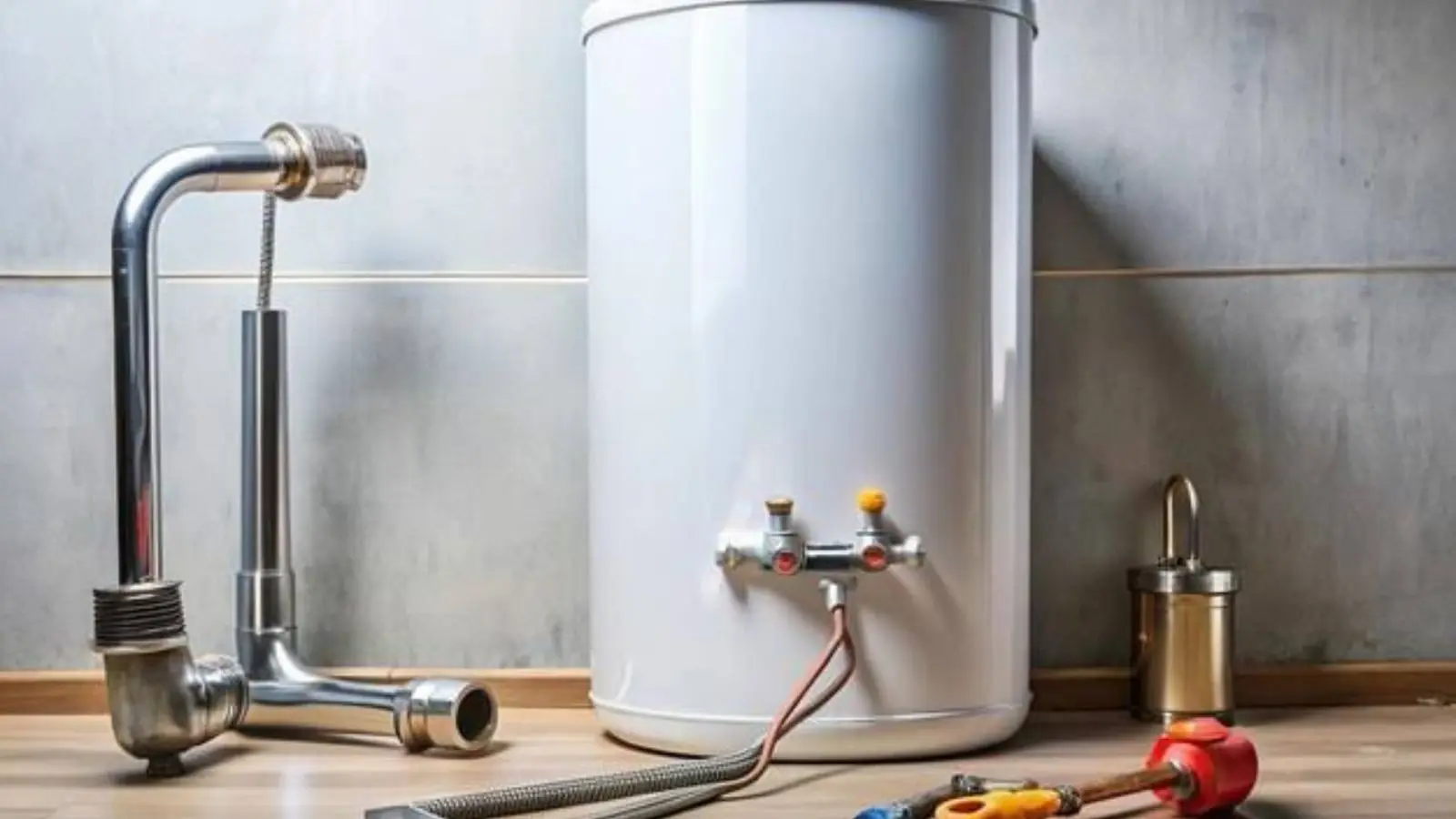
Water heater leaking right now: what to do while you wait
A leaking water heater can empty most of its tank onto the floor in a short time, and the supply line keeps feeding it until you close the valve. Our line answers 24/7, so call after you have done the safe steps below. Close the cold-water shutoff on top of the heater, switch off its power or gas control, and keep everyone out of the wet area until you know what is plugged in nearby.
Water heater shutoff safety: gas, electric and the main valve
Gas and electricity come before towels
On a gas heater, turn the control knob to off only if you can reach it without stepping through water. If you smell gas, do not touch switches or flames. SoCalGas says to get out at once, phone its emergency number once you are clear of the building, and dial 911 if anyone is in danger. Make that call before the restoration line.
An electric heater is safest shut down at the breaker, provided the panel is in a dry spot and no water lies between you and it. When the panel is wet or the floor is flooded, keep your distance and phone the utility or 911.
SoCalGas also advises customers to leave damaged gas meters and piping to qualified crews, and the same goes for the line feeding your heater. Call a licensed plumber for that.
If the heater is leaking and you cannot reach its valve, close the main water valve for the whole property. LADWP's leak guidance has you stop all water use inside and out and then watch the meter gauge. If the gauge still moves after the heater valve is closed, there is another leak somewhere else.
Heater still running or dripping?
Tell the dispatcher where the heater sits, whether it burns gas or runs on electricity, and how far the water has traveled. That decides what equipment goes on the truck.
How a water heater leak starts in Reseda homes
Water heater leak cleanup is the removal of water and the drying of materials after a tank or its fittings fail. A tank failure means the steel shell has corroded through, usually at the bottom, and the whole tank can drain. A fitting failure is smaller: a supply connector, relief valve or drain valve weeps or sprays, and the damage depends on how long it ran.
The City Planning profile for Reseda shows 55.8% of homes are single-unit and 42.9% multi-unit, with the largest share built in the 1950s.
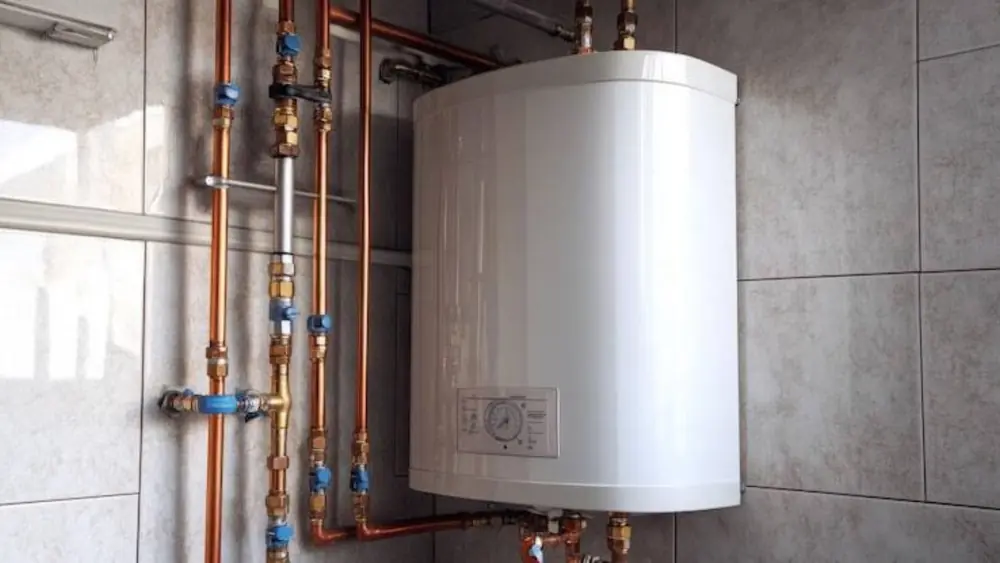
Where the heater lives varies by property: a garage corner, a hall closet, a utility closet in a condo, sometimes a ceiling space. Find yours before a leak happens. In a unit with neighbors below or beside, a spill becomes their problem too, so closing the supply fast matters.
Signs of a water heater leak and what each one means
Puddle around the base
A tank-bottom puddle that keeps coming back usually points to a failing shell. The tank is generally replaced, and the floor needs drying in the meantime.
Wet fittings or pipes on top
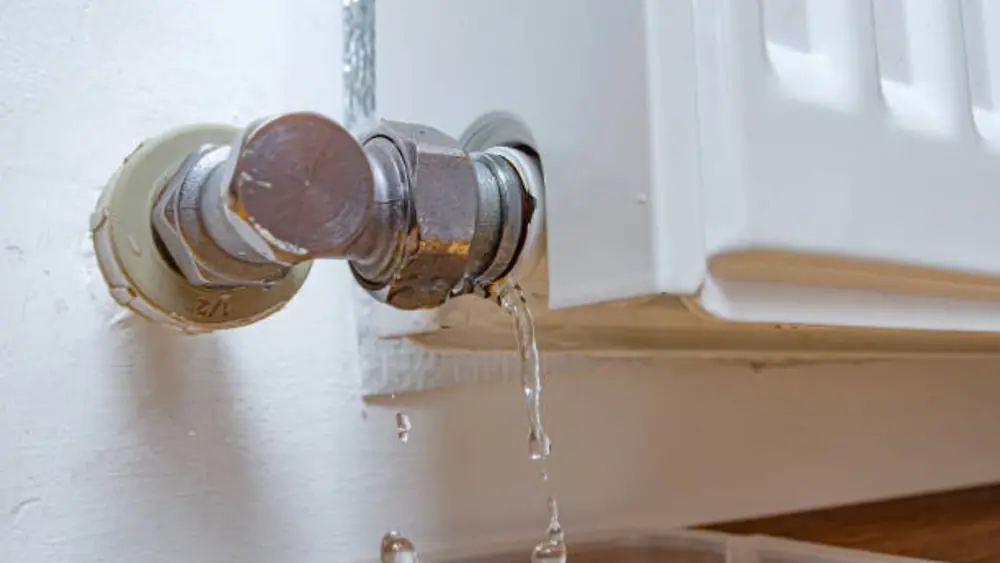
Drips at the supply connectors or relief valve mean the leak may be repairable by a plumber. The water usually runs down the side and soaks the wall behind.
Soft drywall or baseboard near the closet
Wall material that swells or crumbles has been wet for a while. Moisture meters will show how far it climbed above the visible line.
Garage, closet or attic: where the water goes
| Location | What the water usually reaches | What to check |
|---|---|---|
| Garage | Slab floor, stored boxes, bottom of walls, sometimes the door to the house | Whether the water crossed the threshold into flooring inside |
| Hall or utility closet | Closet floor, adjoining wall, carpet or flooring in the next room | Baseboards and the wall cavity on the other side |
| Attic or ceiling space | Insulation, ceiling drywall below, light fixtures | Ceilings for sagging and any fixture that has water in it |
| Condo or apartment unit | Your floors, plus walls and ceilings of neighbors | Written notice to your landlord or HOA |
Not every property has an attic heater, and flat-roof buildings may have none, so look at your own unit. If the heater is above the living space, a leak shows first as a ceiling stain or sag, and a sagging ceiling can drop water without warning, so stay out from under it.
How we dry a water heater leak
Assess and map
A technician confirms the heater is shut off, then uses moisture meters and a thermal imaging camera to trace how far the water traveled into walls, flooring and ceilings. We record readings so you have a starting point.
Extract
Extraction units, either truck-mounted or portable, lift the standing water off garage slabs and floors. Wet carpet and pad are lifted when they cannot be saved.
Remove what cannot dry
Wet baseboard, soaked insulation and swollen drywall may need to come out, sometimes and the drywall may be cut back to a few inches over the water mark. Cleanup of that debris sits with water damage cleanup.
Dry in place
Air movers and LGR dehumidifiers are set so air moves across wet surfaces and the room moisture drops. Placement of equipment follows what the readings show rather than a hunch.
Monitor and document
Crews check readings on a drying log until materials reach the dry standard. The photos and logs go into your records for the insurance claim.
What changes the cost of a water heater leak cleanup
How much water left the tank
A slow weep from a fitting is a smaller job than a full tank drained onto a slab and into an adjoining room.
How long it ran
A leak found in minutes may only need extraction. A leak found after days has soaked into framing.
Materials reached
Concrete dries differently than carpet, drywall or wood flooring, and each needs a different plan.
Access
A heater in an attic or tight closet makes equipment placement and removal harder.
Ask for the plan and the price before a single air mover goes into the closet or garage. The 24/7 line is the place to start.
Water heater leaks and insurance
Sudden failure versus slow leak
A tank that bursts suddenly is the kind of loss policies usually respond to, while a heater that dripped for months and rotted the floor underneath often falls outside coverage. The tank itself may not be covered even when the damage it caused is. California Department of Insurance guidance puts stopping the leak first, so photograph the scene, keep the failed part, and ask your insurer before repairs.
Replacement, repair and where we stop
We dry and clean up. We do not replace water heaters or fix gas lines, which is plumber work. LADBS says a plumbing permit is generally required to replace a water heater, with an exception for like-for-like swaps by contractors holding the LADBS contractor registration it names. Ask your plumber who pulls the permit, and ask your building department if you are unsure.
If the leak came from a washer or dishwasher instead, see appliance leak water damage. If the water spread across the floor into several rooms, the first 24 to 72 hours are covered under water mitigation. For a Tarzana or Northridge address the same line applies, and we also serve Tarzana and Northridge.
Mistakes after a water heater leak
- Relighting or powering a heater that is still wet or still leaking.
- Stepping into water to reach a breaker or valve.
- Letting the closet door stay shut, which traps moisture behind it.
- Skipping photos before cleanup starts.
The published reference for drying work is ANSI/IICRC S500, and asking a company whether its crews follow it is a reasonable screening question.
Frequently Asked Questions
Is emergency water heater leak cleanup available in Reseda at night or on weekends?
Yes. Calls are taken around the clock, so a leaking tank at 2 a.m. or on a Sunday still reaches a person. Close the heater supply and cut its power or gas first, but only if that is safe.
Should I turn off the water heater before calling?
Yes, if you can do it safely. Close the cold-water valve and switch off the breaker or gas control. If you smell gas or the floor is flooded around the electrical panel, leave and call the utility or 911 first.
Does the cleanup include replacing the heater?
No. Replacement and gas work belong to a licensed plumber. Our job is extracting the water and drying what it reached.
How do I know if there is a second leak?
Close the heater valve and all fixtures, then check the LADWP meter gauge. If it still moves, water is going somewhere else, and a plumber should trace it.
My heater is in the attic of a Reseda condo. Is that different?
It can be. Attic and ceiling-space heaters send water through insulation and ceiling drywall, and units below may be affected. Tell your HOA or landlord in writing and call the line before the ceiling is disturbed.
Water still spreading? Call the 24/7 line at (818) 337-2642.