
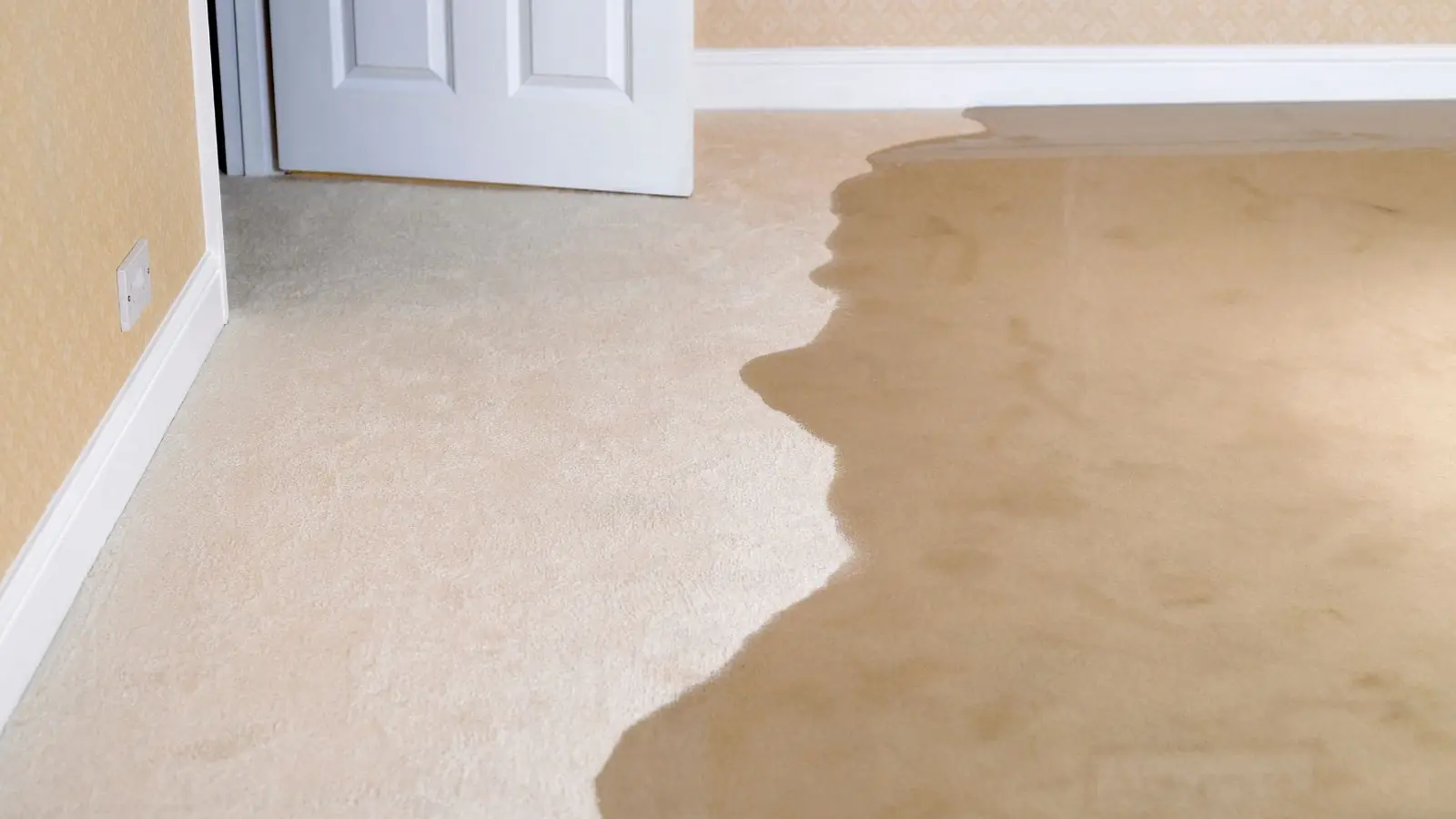
Wet carpet in Reseda: what is really at stake
Carpet water damage restoration means deciding, layer by layer, what can be dried and kept and what has to be replaced. The carpet on top is rarely the whole story. Underneath sit a cushion, a perimeter of tack strip and a subfloor that all soak up water at different rates.
Per the City Planning profile, Reseda and West Van Nuys have 46.2 percent of housing units are renter-occupied, and the biggest share of homes, 39.2 percent, date from 1950 to 1959. If you rent, the carpet may belong to your landlord, so photograph it and report the leak promptly in writing. In an older home, find out what is under the carpet before assuming anything about the floor.
What sits under your feet: carpet, pad, tack strip and subfloor
Carpet
Synthetic fibers on a backing. The fibers shrug off water, but the backing and any glue can hold it. Carpet is often the most salvageable layer.
Pad (cushion)
A foam or fiber layer that acts like a sponge. It holds water against the floor for a long time and is the layer most often discarded.
Tack strip
Thin wood strips with sharp pins around the room's edge that anchor stretched carpet. Wet strips can swell, loosen or stain.
Subfloor
Plywood or a concrete slab. This is where the water ends up, and where drying must be confirmed with a meter.
Not sure if your carpet is worth saving?
Tell the dispatcher the source of the water, how long the carpet has been wet and whether there is a pad underneath. That decides most of the answer.
Where the water came from decides whether carpet survives
Restoration sorts water into three categories by how contaminated it is, and the category matters more than how wet the carpet looks. Time can push water into a worse category, so a clean leak left for days is not always treated as a clean leak.
| Category | Examples on carpet | Usual outcome for carpet and pad |
|---|---|---|
| Category 1 (clean) | A leaking supply hose or a bathtub that ran over | Carpet is often dried and kept. Pad is frequently replaced or dried, depending on readings |
| Category 2 (some contamination) | Washer or dishwasher discharge | Pad is generally removed. Carpet may be cleaned and dried if caught early |
| Category 3 (grossly contaminated) | Sewage, rising outside water | Carpet and pad are removed and discarded, and the subfloor is cleaned |
EPA notes that porous items such as carpet may need to be thrown away after flooding. Where sewage is involved, see sewage backup cleanup, because that route has its own protective steps.
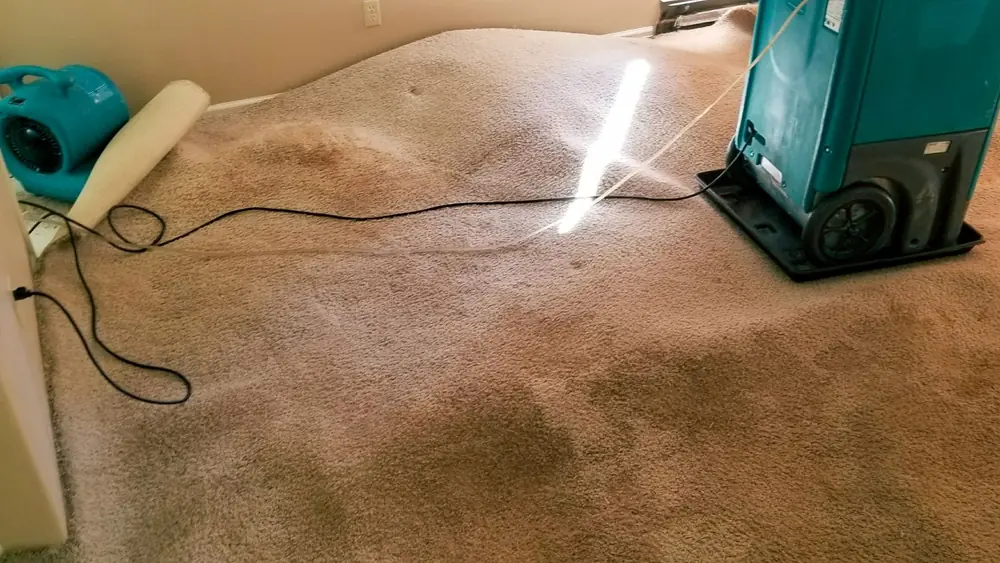
First-hour safety and what to do with soaked carpet
Before you touch the floor
Wet carpet can hide live cords and outlets. Do not step onto a soaked floor to reach a panel, and do not plug anything in. If outlets are wet, or you smell gas, leave the room and call the utility or 911 before the restoration line. Water that backed up out of a drain or toilet means staying off the carpet entirely.
- Stop the source at the shut-off valve, or have a plumber do it.
- Take photos and video of the carpet, walls and furniture before moving anything.
- Lift small furniture off the carpet. Put foil or plastic under legs of pieces that stay, so wood stain does not bleed.
- Skip the household vacuum. Use only a vacuum rated for wet pickup.
- Call the 24/7 line. Dispatch begins with your call, and the person answering will say what to leave untouched.
Pad versus carpet: why the cushion goes first
Carpet fiber releases water readily. Pad does not. Foam and fiber cushions soak up water, drain slowly and sit between the carpet backing and the subfloor, holding moisture against both. Even after extraction, a damp pad keeps the subfloor wet.
That is why pad is replaced more often than carpet, and why replacing it is usually the cheaper half of the repair. A carpet that is otherwise sound can often be reinstalled over a new cushion after the floor has been dried.
Carpet that shrinks or smells after drying may still be a replacement even when the water was clean. Technicians check the backing, seams and smell before recommending.
Drying in place or lifting the carpet
| Method | How it works | When it fits |
|---|---|---|
| Dry in place | Extract water, then dry with air movers and dehumidifiers while the carpet stays tacked down | Recent clean-water leaks, small areas, pad that tests dry or is removed through a cut |
| Lift and float | Carpet is released from the tack strip at a corner, the pad comes out and air moves under the carpet | Wet pad, larger areas, water that sat, or a subfloor that needs direct drying |
| Remove and replace | Carpet and pad are cut up and carried out, the floor is dried and cleaned | Category 3 water, old or delaminated backing, carpet that smells after drying |
If carpet is lifted and dried, it is re-stretched afterward with a power stretcher and re-secured to the tack strip. The technician checks the strip first, because swollen or rusty pins will not hold.
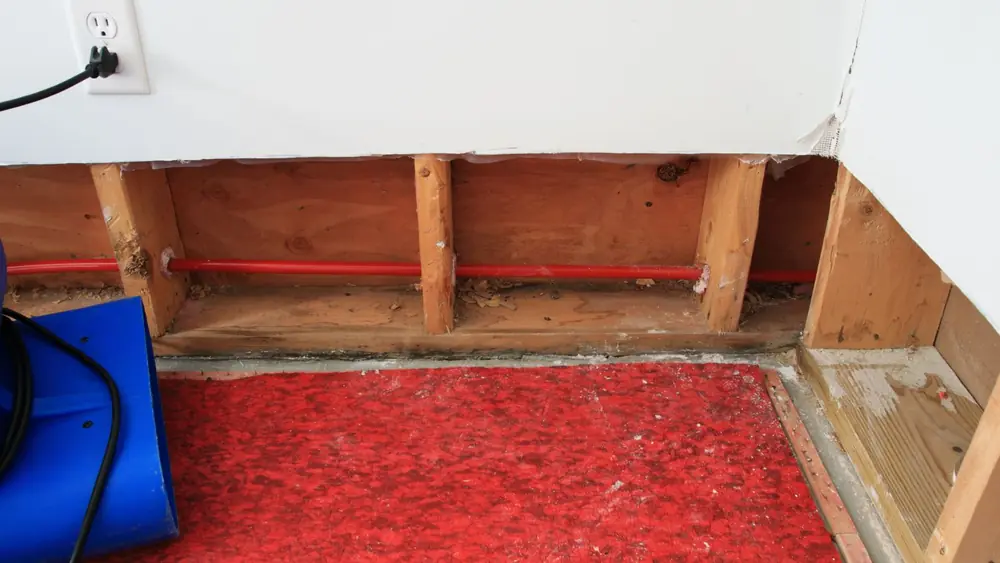
How a carpet restoration job runs
Identify the water
The technician confirms the source is stopped and sets the water category.
Extract
A truck-mounted or portable extraction unit with a weighted wand pulls water out of the carpet and pad before drying starts.
Read the layers
A moisture meter and thermal imaging camera check the pad, tack strip and subfloor, not only the carpet.
Dry the floor
Air movers and LGR dehumidifiers run on a drying log. The structural drying page explains the readings behind that.
Decide and rebuild
Once the floor reads dry, the carpet is cleaned and reinstalled or replaced.
Timing and mold risk under wet carpet
The EPA window for stopping mold is a day or two, 24 to 48 hours, from the moment materials get wet. Carpet that sits wet over a pad past that window is a common place for musty smell and growth to begin, because the underside stays dark and damp.
If you spot fuzzy or dark growth on the carpet back or pad, do not paint over or scrub it dry. EPA recommends an N-95 respirator, gloves and goggles for cleanup, and the underlying water problem has to be fixed first. Larger patches belong with mold remediation.
What drives the cost of a carpet water job
Most callers want a quote first, and a fair one comes after someone sees the floor. The assessment records the source, area, layers and readings, and the scope is written before work starts.
Water category
Contaminated water means removal and cleaning of the subfloor, not just drying.
Square footage and pad type
More wet area and thicker cushion mean more extraction and more material to haul out.
Subfloor material
A concrete slab takes longer to dry than plywood and may keep equipment on site longer.
Lift versus in place
Lifting carpet adds labor, re-stretching and tack strip work.
Time since the loss
Carpet wet for days has soaked deeper and is more likely to be replaced.
Describe the room on the 24/7 line and a technician will tell you how these apply.
Carpet and your insurance policy
Sudden and accidental water is often covered, while gradual leaks and wear and tear are commonly excluded, and the California Department of Insurance notes that ordinary homeowners and renters coverage usually leaves out flood. Check your policy for how flooring is treated, and keep photos, receipts and drying logs for your adjuster.
Carpet mistakes that cost you the floor
- Leaving the pad in place because the top of the carpet feels dry.
- Using a carpet cleaning machine as if it were drying equipment.
- Walking on wet carpet, which pushes water and dirt into the backing.
- Replacing carpet before the subfloor has a dry reading.
Water often travels past the carpet edge into the wall base, which is where water mitigation comes in for the first hours. Once the floor is dry and the carpet is gone or cleaned, water damage repair covers new flooring and trim.
Carpet jobs across Reseda and nearby
Our base is Saticoy Street, ZIP 91335. When your carpet is in Tarzana or Winnetka, the pages on water damage restoration in Tarzana and the Winnetka service page describe the local detail. For a deep flood, flood damage restoration is the better starting point.
Frequently Asked Questions
Is emergency carpet water damage restoration available in Reseda?
Yes. Calls get answered day and night, weekends too, and dispatch starts right after. Expect questions about the water source, plus advice on what to avoid touching while you wait.
Can wet carpet be saved?
Often, if the water was clean and the carpet was extracted and dried quickly. The pad usually needs replacing. Carpet touched by sewage or flood water generally cannot be made safe and is removed.
How long can carpet stay wet before it is ruined?
No exact number applies to every floor. EPA puts the mold-prevention window at a day or two after wetting, and the sooner extraction starts, the better the odds of keeping the carpet.
I rent in Reseda and my carpet is soaked. Who deals with it?
Tell your landlord in writing right away and keep photos. Which of you pays depends on your lease and the cause, so read the lease. Your renters policy may cover your belongings, so check it.
Do you need to pull up the carpet to dry the floor?
Not always. Meters decide. If the pad and subfloor read wet, the carpet is released at a corner and floated, or removed.
Water still spreading? Call the 24/7 line at (818) 337-2642.