
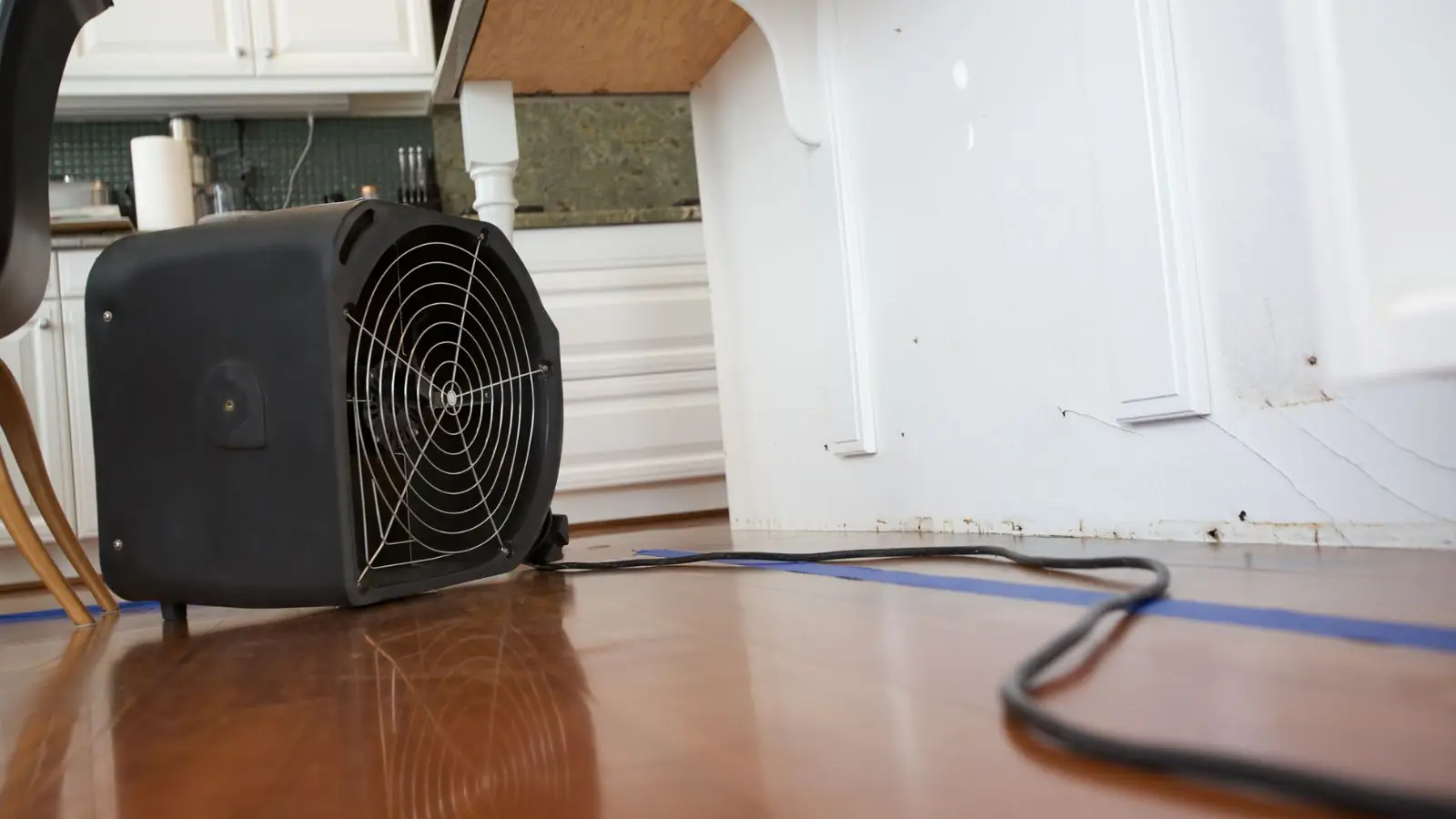
Why a kitchen holds water longer than you expect
Kitchen water damage is moisture from a sink, dishwasher, faucet, supply line or drain that soaks the floor, the cabinet boxes and the wall behind them. This page treats the kitchen as a room. If your question is about the washer, dishwasher or fridge itself, the appliance leak page is the better fit.
The reason kitchens trap water is the layout. Base cabinets sit on a recessed toe-kick, so water slides under the box and stays against the particleboard. Countertops and cabinet faces look fine while the cabinet floor is soaked. The sink base also holds the shut-off valves, the drain and the dishwasher line in one small, closed space, so a drip there can run for days with no puddle on the open floor.
In City Planning's community profile, homes built from 1950 to 1959 make up 39.2% of Reseda and West Van Nuys housing, the biggest single share. Kitchens from that period may have been remodeled once or twice, with newer cabinets on older plumbing. That makes the valves and supply lines under the sink worth a look when you see damage.
Kitchen water safety: what to do before anything else
Power, gas and wet floors
Kitchens combine outlets, a range, a dishwasher and often a gas line. A gas smell means everyone goes outside first, then the gas utility or 911 gets the call, and the restoration line comes after. Stay off light switches near standing water. Switch off the kitchen circuit only when the panel is in a dry spot you can walk to without touching water.
- Close the angle stop under the sink for the leaking line. If that fails, close the main water valve.
- Empty the cabinet under the sink and set the contents on a dry counter.
- Pull rugs and mats and take photos of the cabinet base, the toe-kick and the floor.
- Open the cabinet doors so air reaches the inside.
- Call the 24/7 line before you pry anything off.
A hidden supply leak is a different puzzle. LADWP suggests closing everything that uses water and then reading the leak-detection gauge on the meter. A gauge that still turns means water is escaping somewhere, possibly inside a kitchen wall.
Cabinet doors warping or floor going soft?
Tell the dispatcher what the cabinets and floor look like and where the water started. A technician can say what the readings are likely to show.
Signs the water went behind the cabinets
Toe-kick swelling or peeling
The bottom strip is the first part to wick water. Swollen, bubbled or crumbling material means the cabinet bottom has been wet.
Doors that no longer close flat
Humidity or direct water has warped the cabinet face frame or the box.
Soft or lifting floor at the dishwasher edge
Water has reached the flooring layers. Seams lift and the floor feels spongy underfoot.
Countertop edge lifting
Laminate or particleboard under the sink cutout has taken up water. Stone is unaffected, but the cabinet below can be.
Stale, musty air in the sink base
Moisture is trapped inside. Mold needs moisture to grow, so find the source and dry it before anything else.
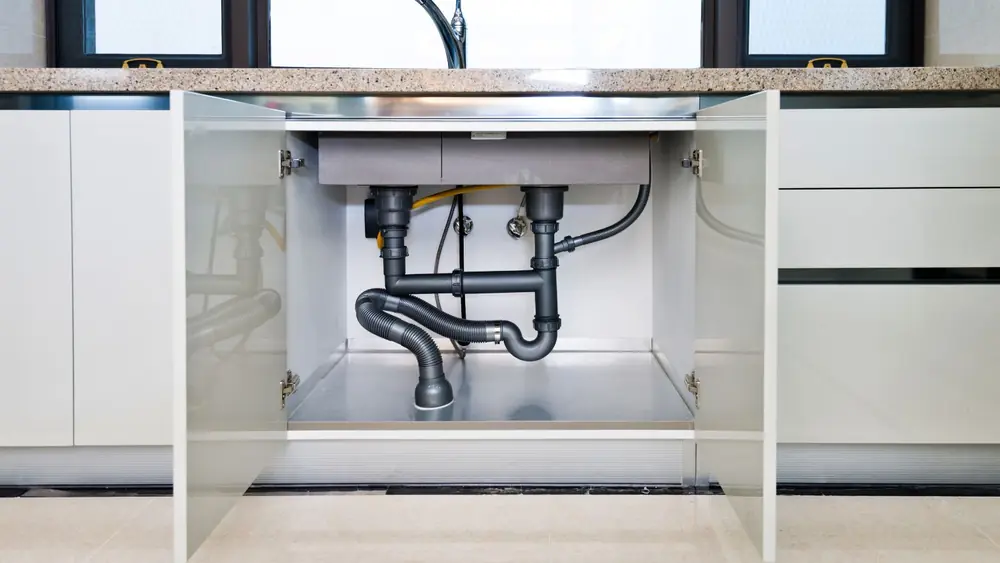
Drying a kitchen, step by step
Map the moisture
Readings from a moisture meter, backed by a thermal imaging camera, reveal how far water traveled beneath the cabinets and along the wall base.
Extract and open
Extraction units clear the floor. Toe-kicks come off, and small openings let air in behind the base cabinets.
Pull what cannot dry
Soaked pad, particleboard cabinet bottoms and swollen underlayment are removed so they stop holding water.
Dry in place
Air movers push air into the cavity and LGR dehumidifiers pull the moisture out. Dry goals are set from readings in unaffected areas.
Check and log
Readings are logged on each visit until the cabinet boxes, subfloor and wall base reach their goal. Equipment comes out only after that.
Cabinets, countertops and floors: dry, repair or replace
| Material | Often survives drying? | Watch for |
|---|---|---|
| Solid wood cabinet box | Often, if dried promptly | Warping, finish damage, stained base |
| Particleboard cabinet box | Rarely once soaked | Swelling that does not reverse, crumbling edges |
| Stone or solid-surface countertop | Yes, the top itself | Wet cabinets below it, seam failure |
| Laminate countertop | Depends on the edge and cutout | Bubbled or lifted laminate near the sink |
| Vinyl or laminate flooring | Often replaced if water got underneath | Cupping, open seams, wet subfloor |
| Tile flooring | Often, tile itself is fine | Wet underlayment, loose grout, wet subfloor |
Readings, not appearance, decide the call. A cabinet that looks fine can still be wet inside, so the rule is to measure first and remove only what the numbers support. For a deeper look at the science behind these readings, our structural drying page explains the equipment and goals.
Repairs and permits after the kitchen is dry
Once readings are at goal, the rebuild is a separate stage, described on the water damage repair page. For permits, LADBS lists Express Permits that include repair of water damage under 10% of a building's replacement cost in residential buildings. These permits skip plan check but they are still permits.
Replacing drywall where no new walls are built is also on the LADBS Express Permit list for single-family homes and duplexes. Whether your repair needs a permit depends on the work and the building type, so ask the city building department before you start. A licensed contractor can tell you what applies.
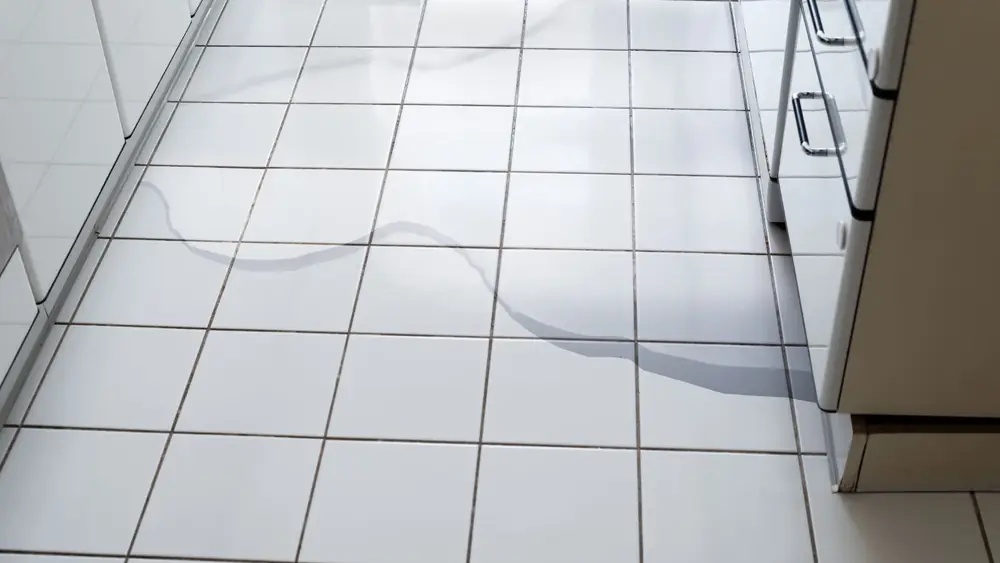
What affects the cost of kitchen water damage
Cabinet material
Solid wood often dries. Particleboard boxes soaked through often come out.
Linear run affected
A single sink base is a smaller job than a wall of cabinets that shares a subfloor.
Flooring type
Tile, vinyl, laminate and wood each dry differently and may continue under cabinets.
Time since the leak
A fresh supply line failure is mostly extraction. A slow leak means more wet hidden material.
Equipment duration
Days of air movers and dehumidifiers depend on how fast readings fall.
Readings drive the scope, and a technician explains it along with the cost before any work begins. For your own numbers, ring the 24/7 line.
Kitchen water damage and your insurance claim
What to document before cabinets come out
Coverage often turns on whether the leak was sudden and accidental or gradual, so check your policy or ask your insurer. The California Department of Insurance claim guidance covers a short list. Make temporary repairs and save the receipts, hold the big rebuild until the adjuster has looked, keep damaged items until told otherwise, and collect written line-item bids from licensed contractors. Photograph the cabinets and floor before demolition.
Mistakes that cost kitchens more than the leak did
- Replacing the countertop before the cabinet bases have dried.
- Sealing the toe-kick back on over a wet cabinet bottom.
- Painting or caulking over stained wood to hide it.
- Running a space heater to dry the floor. Controlled air and dehumidification do the job better.
- Tossing the failed part before photographing it.
Standing water on the floor first needs emergency water removal. Moisture goals in this work are taken from ANSI/IICRC S500, the industry's water damage reference, and a fair question for any contractor is whether they use it.
We work in kitchens from Encino to Woodland Hills, with the Reseda base a short drive away.
Frequently Asked Questions
Is emergency kitchen water damage restoration available in Reseda?
Yes. Phone staff pick up 24/7 and dispatch assigns a crew once the situation is described. Timing depends on the day's call volume, so no arrival window is offered, and the dispatcher will explain how to limit damage until someone reaches you.
Do you have to remove the base cabinets to dry behind them?
Not always. Often the toe-kick comes off and air is pushed into the cavity. Cabinets come out only when readings show they cannot dry in place.
Will my particleboard cabinets be saved?
Particleboard that is soaked and swollen rarely recovers. Cabinets that only saw humidity or a brief wetting may dry. Readings decide, not looks.
Can I tell if the leak is in the kitchen wall?
A moving LADWP meter gauge with everything off points to a leak somewhere. A moisture meter along the wall base then narrows it. A plumber repairs the pipe.
Do I need a permit for kitchen water damage repairs in Reseda?
It depends on the work and building type. LADBS lists Express Permits for some water damage repairs, but ask your city building department what applies to your project.
Water still spreading? Call the 24/7 line at (818) 337-2642.