
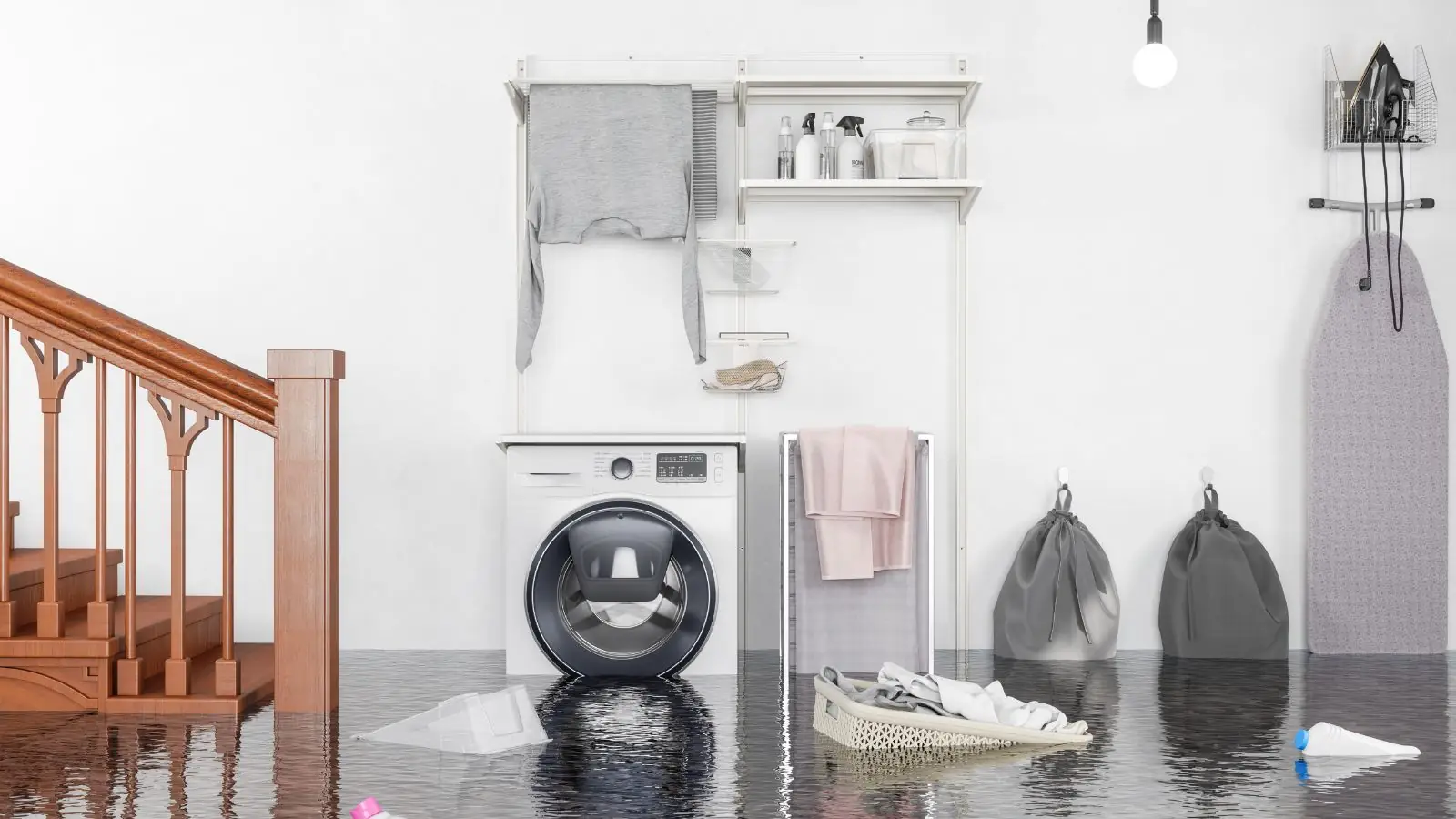
How an appliance leak turns into water damage in Reseda
An appliance leak is water escaping from a machine or the lines that feed and drain it: a washing machine hose, a dishwasher inlet or drain connection, a refrigerator ice maker line, or a dryer-room utility sink. This page is about the machine and its connections. Once the water has soaked a cabinet run and countertop, the job becomes a room-level one handled on the kitchen water damage page.
Per the City Planning community profile, Reseda and West Van Nuys hold 37,825 housing units, 55.8% single-unit and 42.9% multi-unit. The same profile puts the largest share, 39.2%, in homes built from 1950 to 1959. That mix means two different leaks: a house machine that wets its own floor, and a multi-unit machine whose water can drip into the unit below. Which one you have decides who must be told.
Slow leaks are the common trap. A pinhole in a braided hose or a loose drain clamp can run only during a cycle, so the floor stays damp for weeks.
What you see and what it means
Puddle only during a cycle
Points to a drain hose, a loose clamp or a door seal. Water appears when the machine pumps out, not when it sits idle.
Damp floor around the machine at all times
Suggests a pressurized inlet hose or valve weeping constantly. The supply is live even when the machine is off.
Stain or drip on the ceiling below
In a condo or upper floor, the leak has gone through the subfloor. The unit below is now part of the loss.
Musty smell behind a fridge or in the laundry closet
A hidden ice maker or washer box leak is wetting drywall. Mold needs moisture, so the source must be fixed and the wall dried.
Not sure which machine is leaking?
Tell the dispatcher what you see, where the water is pooling and whether it stops when the appliance is off. That is usually enough to plan the visit.
Appliance leak safety: the first minutes
Water and electricity share this room
Washers, dishwashers and refrigerators are plugged in. Do not step into standing water around a machine that is still connected. Switch off that circuit's breaker only when the panel stands on dry ground and you can get to it without walking through water. If the water has reached outlets or the panel, leave the area and call 911 or the utility before you call the restoration line.
- Close the supply valve to the appliance. Washer valves are usually on the wall behind the machine, and the ice maker or dishwasher valve is often under the sink or behind the fridge.
- If the valve will not close, shut the main water valve for the home.
- Unplug the appliance only when the cord and outlet are dry, then pull towels over the edge of the puddle.
- Photograph the machine, the hose or fitting, and the wet floor before you move anything.
- Lift rugs, cords and cardboard off the floor and call the 24/7 line.
If you cannot tell whether the appliance is the source, the LADWP leak-check guidance offers a quick test: close every faucet and fixture, then check whether the meter's leak-detection dial keeps spinning. A dial that never rests means water is escaping somewhere, which may be a supply line rather than the appliance.
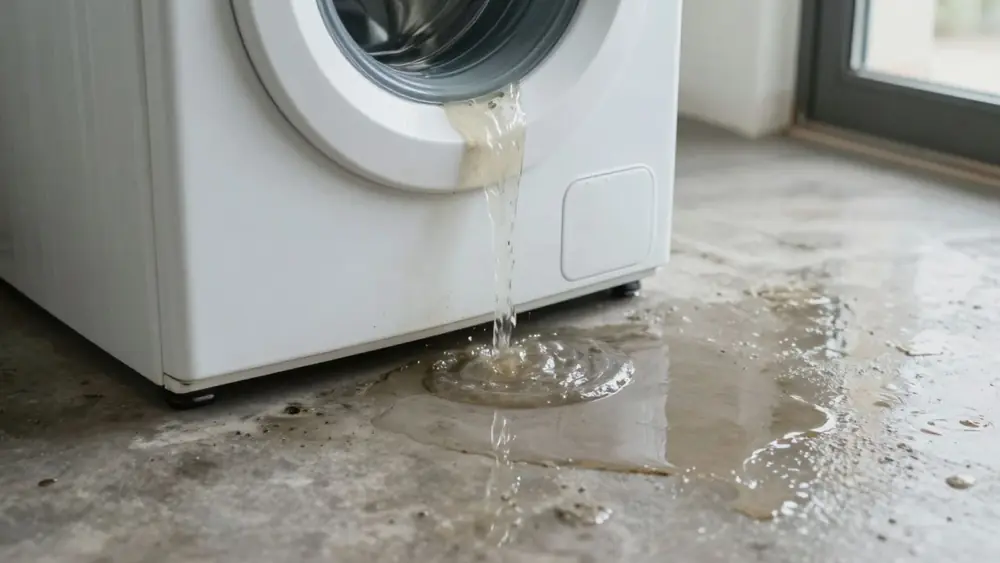
How the crew dries an appliance leak
Find the path of the water
Moisture meters and thermal imaging show where the water traveled, including under flooring, into the wall base and toward the next room.
Extract what is standing
Portable extraction units pull water from the floor. Soaked pad and the lowest section of wet baseboard come out so they stop holding moisture.
Open the hidden spots
Small openings at the wall base or under the machine let air reach wet drywall and insulation. Nothing is cut that the readings do not justify.
Set air movers and dehumidifiers
Air movers push dry air across the surfaces while LGR units condense humidity from the air. Placement follows the moisture map instead of habit.
Log readings and document
Moisture readings are logged each visit until materials reach their dry goal.
Washer, dishwasher or ice maker: how each one wets a home
| Appliance | Typical failure | Where the water goes |
|---|---|---|
| Washing machine | Inlet hose burst, drain hose popped off, overflow | Floor, wall base, unit below if upstairs. Often a lot of water in a short time |
| Dishwasher | Inlet connection, door gasket, drain loop | Under the unit, into the cabinet base and flooring. Often a slow, repeated wetting |
| Refrigerator ice maker | Pinched or cracked water line, loose fitting | Behind and under the fridge, into the wall and subfloor. Often unnoticed for a long time |
A washer that dumps a full tub is a one-time soak that needs fast extraction. An ice maker line is a hidden trickle that needs moisture mapping first.
Upper-floor, condo and rental leaks
The profile reports 53.8% of Reseda area housing units owner-occupied and 46.2% renter-occupied. If you rent, send the landlord a dated written repair request, save a copy beside your photos, and go to local code enforcement if nothing happens. The Attorney General's tenant guidance in California lays out that sequence and adds that rentals need working plumbing and walls that keep water out.
California Department of Insurance material separates two policies. A renters policy responds to your belongings and may help with water backup, while a landlord's policy often leaves tenant risks out. Your clothes, furniture and electronics are therefore usually a renters policy question, and the building belongs to the landlord or HOA. Confirm which applies before you discard anything.
When the leak is in your unit and the water reached the neighbor below, tell the HOA or landlord right away and let them know a restoration crew is drying your floor. The drying plan often has to cover the wall you share with the next unit, which is the first stage described under water mitigation.
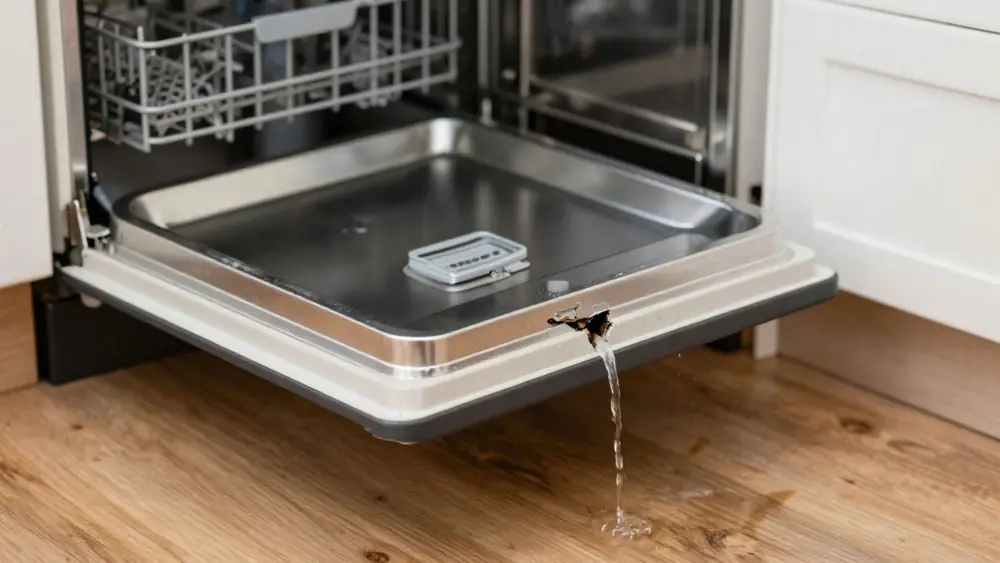
What changes the cost of an appliance leak
How long it leaked
A one-time burst is mostly extraction. A months-long drip means more hidden wet material to open and dry.
Floor type
Tile dries fast on top and holds water below. Laminate and wood swell and may need to be replaced.
Equipment days
Air movers and dehumidifiers run until readings reach the dry goal.
No work begins until the scope and its cost have been explained to you, using what the meters show. To hear yours, phone the 24/7 line.
Appliance leaks and your insurance
Sudden failure or slow drip?
Policies often draw a line between a hose that fails suddenly and accidentally and a leak that dripped for months. Outside flooding is usually a separate matter with its own coverage, so read your policy or ask your insurer. Document everything: photos of the failed part, moisture logs and a list of damaged items. Per the California Department of Insurance, make temporary repairs, save receipts, and delay big permanent repairs until the adjuster has inspected the damage.
Mistakes that make an appliance leak worse
- Running the machine again to see if it still leaks. Another cycle can add more water to the same hidden spot.
- Mopping and calling it done. A dry surface can sit on a wet subfloor.
- Pushing the fridge back against a wet wall. Keep air moving behind it.
If the water has spread past the machine into a full room, the larger job of removing wet debris is covered under water damage cleanup. Standing water more than a mop can handle belongs to emergency water removal. Drying targets here come from the ANSI/IICRC S500 water damage standard, which is public, so any contractor you consider should be able to say whether it works to it.
Frequently Asked Questions
Is emergency appliance leak cleanup available in Reseda?
Yes. Phone calls are taken 24/7, and dispatch assigns a crew once you have described the leak. No arrival window can be promised because it shifts with how many calls are ahead of yours, so ask the dispatcher what to do in the meantime.
Should I repair the washer or hose before you start?
Shut the supply valve first. Replacing the hose or machine is an appliance technician's or plumber's job. We handle the water damage left behind and can work around a repair visit.
My upstairs neighbor's dishwasher leaked into my unit. What do I do?
Photograph the damage, tell the landlord or HOA in writing, and call the 24/7 line to dry your ceiling and walls. Ask your insurer what applies to your belongings and the building.
Can an ice maker line leak without my seeing water?
Yes. The line runs behind the fridge and into the wall or floor, so a slow leak can stay hidden. A musty smell, soft flooring or a damp wall base are the clues, and a moisture meter confirms them.
Water still spreading? Call the 24/7 line at (818) 337-2642.