
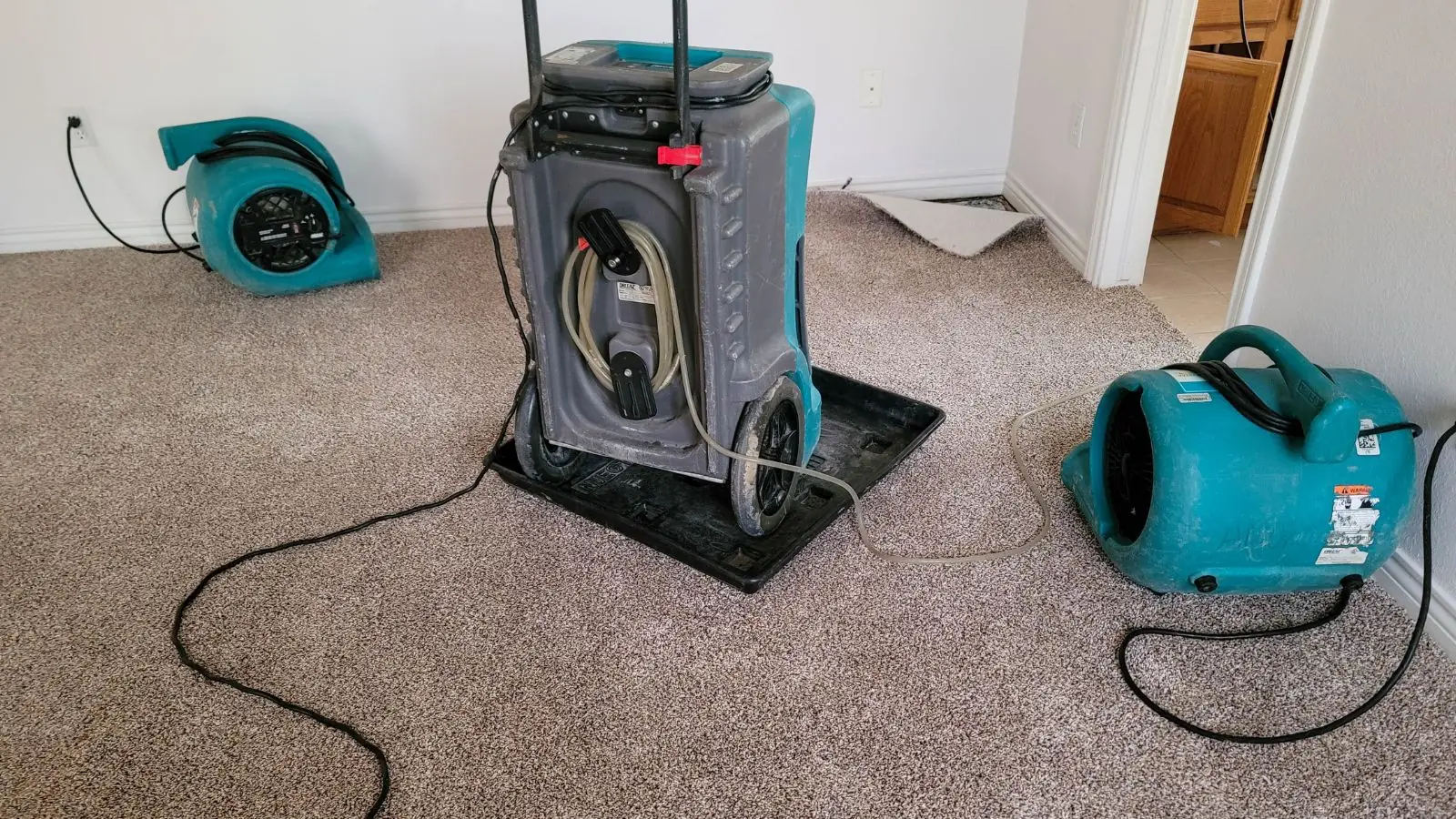
What structural drying and dehumidification mean for a Reseda home
Structural drying and dehumidification is the planned removal of moisture from the building itself: framing, subfloor, plaster or drywall, and concrete. It is not the same as pumping out puddles. Carpet can feel normal by morning while the bottom plate of the wall behind it still holds water.
In the City Planning profile, the biggest slice of local homes, 39.2 percent, dates to 1950 through 1959, and that 42.9 percent of housing is multi-unit. Older framing and shared walls give water hidden routes into neighboring rooms and units. Ask any drying company to take readings beside and below the wet room, not only inside it.
Rainfall in the NOAA normals for Van Nuys Airport stays at or below 0.12 inches a month from June into September, so a summer job seldom battles damp outdoor air. Rainy stretches differ, which is why a crew keeps the drying space closed.
Why a room that feels dry may still be wet
Your hand tests the surface, but water sits deeper, in stud ends, behind baseboard and under flooring. Here is what homeowners notice and what it usually means.
Baseboard feels cool to the touch
Evaporating water pulls heat from whatever it sits in. A cold strip along the bottom of a wall often marks a wet cavity.
Doors stick and trim lifts
Wood swells as it absorbs water. A door that rubs its frame after a leak suggests nearby framing is still carrying moisture.
Wall reads dry high and wet low
Water wicks upward from the floor line. A reading at eye level says little about the bottom six inches.
Equipment already running and unsure it is enough?
Tell the dispatcher which materials got wet, how long ago, and what the humidity reads in the room. A technician can explain what a monitored drying plan adds.
Evaporation, air movement and dehumidification in plain words
Drying a building follows the physics of a damp towel on a line. Three things set the speed, and a good plan manages all of them at once.
Evaporation and air movement
Liquid water leaves a surface as vapor. Warm materials release it faster than cold ones, and drier air accepts it faster. Air movers sweep away the damp film clinging to wet surfaces, angled along the wall.
Dehumidification
Vapor must leave the building. An LGR dehumidifier (low grain refrigerant) chills air so vapor condenses on coils and drains away, and it keeps working in fairly dry rooms. Desiccant units use a moisture-absorbing wheel and suit cold spaces or very low targets.
Psychrometrics, briefly
Relative humidity shifts with temperature, so crews also track grains per pound, the weight of vapor in a pound of air. Comparing it indoors, at the dehumidifier exhaust and outdoors shows whether machines pull water out.
EPA treats indoor humidity as acceptable below 60 percent and ideal between 30 and 50. That suits everyday life. During a loss the wet material is the real target.
Drying goals and the daily readings that prove progress
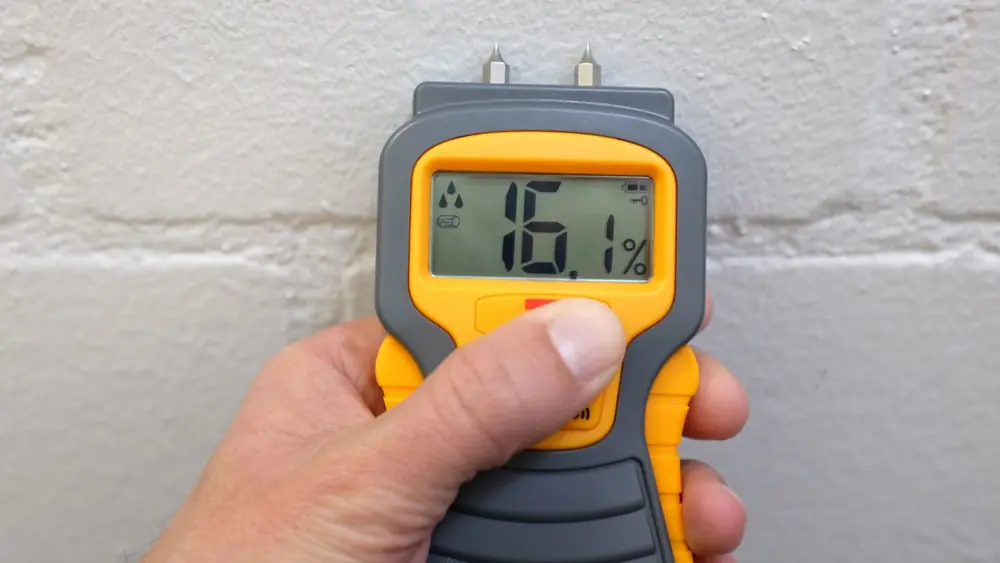
A drying goal is a reading, not a day count. The technician measures the same kind of material in an unaffected part of your building and records it as the dry standard. Wet areas are dried until they match.
The published ANSI/IICRC S500 standard for professional water damage restoration describes setting a drying goal and documenting progress. Ask any company where its numbers are written down.
Each monitoring visit repeats the same routine so numbers compare from day to day:
- Temperature, relative humidity and grains per pound in the room, at the dehumidifier exhaust and outdoors.
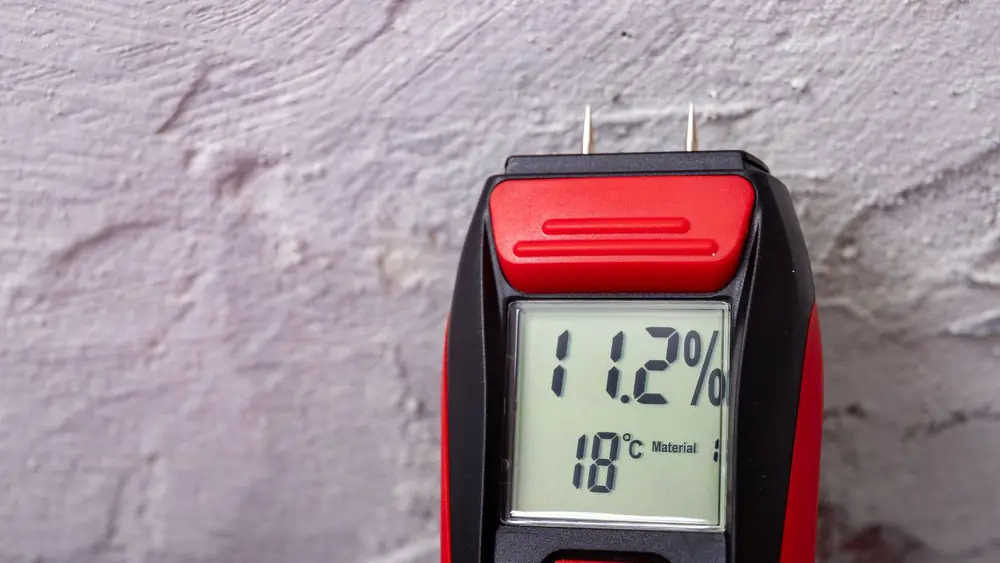
- Moisture meter readings at the same marked points on walls, framing and floors.
- A thermal imaging camera scan for cool, damp patches.
- Water collected by each dehumidifier.
Mold prevention guidance from EPA sets a target of one to two days, 24 to 48 hours, for wet items. Surface materials may get there. Framing and slabs usually need longer, so the trend matters: a falling number at every marked point means the plan is working.
Where the equipment goes and why it moves between visits
Placement follows the wet material. Air movers sit along the wettest walls, angled so airflow circles the room. Dehumidifiers are sized to the air volume, and doors stay shut so they are not drying the whole house.
Fans cannot reach closed cavities. Technicians remove a few inches of baseboard or drill small holes to push dry air through, and hardwood may get drying mats.
Equipment also moves. As readings fall, air movers shift toward the slow spots and finished areas lose their machines. A setup that never changes usually means nobody is reading the numbers.
Wood, drywall and concrete dry at different speeds
| Material | How it holds water | What drying looks like |
|---|---|---|
| Drywall and plaster | Wicks water upward and softens | Often dries in place if clean water is caught early. Otherwise cut out |
| Framing and subfloor lumber | Absorbs slowly, releases slowly | Air and dehumidification over several visits, checked at the cut ends |
| Hardwood flooring | Swells and may cup | Gentle, steady drying, sometimes with mats, then a recheck before refinishing |
| Concrete slab | Dense, holds water deep inside | The slowest of all, often still running after other areas finish |
| Insulation | Acts like a sponge in wall cavities | Wet batts are usually removed so the cavity can dry |
Wood moves as it dries, and extreme heat can split or cup boards, so crews aim for steady conditions. Concrete reads dry on the surface long before the inside catches up.
Some materials are not worth drying. California Department of Public Health guidance notes that porous materials such as drywall usually cannot be cleaned effectively once moldy. If wet drywall stays wet, removal beats weeks of equipment, and visible growth belongs with mold remediation.
Safety around running drying equipment
Power, cords and wet floors
A drying setup draws real electricity, and the floor may still be damp. Do not add extension cords, unplug machines to charge a phone, or move equipment across standing water. If an outlet is wet or the panel sits in a damp area, stay clear and phone the utility or 911 about that hazard first, then us.
Keep children and pets away from hoses and warm dehumidifier housings. If water came from a toilet or drain, stay out of the room.
Switching machines off overnight loses the day's progress. Ask about a quieter layout instead.
How a monitored drying job runs
Confirm the starting point
The technician confirms the water is stopped, notes the water category and sets the dry standard from unaffected material. Shut-off and extraction in the opening hours are covered on the water mitigation page.
Map the moisture
Meter readings paired with a thermal image reveal the path the water took. Marked points keep later readings comparable.
Build the drying space
Doors close, wet cavities are opened where needed, and air movers and LGR dehumidifiers go in, sized to the wet area and the volume of air.
Monitor and adjust
Daily visits record numbers and move equipment. Materials that stall are reconsidered.
Prove it and pull the equipment
When every marked point meets the dry standard, a final set of readings goes on the log and the equipment leaves.
What drives the length and price of a drying job
Callers usually ask for a quote first. Drying cost depends on facts that only show on site, so the assessment records them and a written scope explains the price first.
Volume of the drying space
Bigger rooms and taller ceilings hold more air, which means more dehumidifier capacity.
Materials that got wet
Slabs, hardwood and thick framing take more days than carpet and drywall.
Days on site and monitoring visits
Equipment and daily readings are tracked for as long as the numbers need.
Access to hidden cavities
Built-in cabinets, tight crawl spaces and finished walls take more labor to open.
Water category and time since the loss
Contaminated water adds removal work, and water that sat for days soaks deeper.
Want a figure for your own job? Phone any hour and list the materials and rooms involved.
Drying records and your insurance claim
Coverage often follows sudden and accidental water, and slow leaks or neglect tend to be excluded, so read your policy. The California Department of Insurance recommends moving air, running dehumidifiers and stopping leaks at the source without delay. Daily readings, photos and equipment logs show an adjuster what was done and when.
How you know drying is finished, and the mistakes that stretch it out
Drying is finished when every marked point meets the dry standard on consecutive visits. Ask to see the final sheet. A quiet room or a calendar date is not proof.
- Opening windows while dehumidifiers run, which lets in the very air they are trying to dry.
- Closing up walls or laying new flooring before final readings.
- Trusting a handheld humidity gauge as proof that the framing is dry.
After the numbers pass, water damage cleanup takes care of leftover debris and odor, and water damage repair rebuilds what was removed. Large-scale ground or storm water events are a separate case, handled by flood damage restoration.
Drying crews working out of Reseda
Crews head out from Saticoy Street, ZIP 91335. If your loss is in the next neighborhood over, the same monitoring routine applies. See water damage restoration in Northridge or the Encino service page for what to expect in those areas.
Frequently Asked Questions
Is emergency structural drying available in Reseda?
Yes. Someone answers every hour of every day and sends a crew once you call. You will be asked what got wet and how long ago, then told what is safe to do until the crew is set.
How long will structural drying take?
No honest number exists before the materials are measured. Carpet and thin drywall can finish in a few days. Framing, hardwood and slabs take longer. Drying ends when the readings reach the dry standard, not on a set date.
Can I just use a household dehumidifier and a fan?
Small, clean spills, yes, but a home unit has limited capacity and cannot reach wet cavities. We do not rent equipment.
Do Reseda's dry summers mean my house will dry by itself?
Not reliably. Water trapped in framing, under flooring or inside a slab does not follow the weather outside. Dry summer air may help, but without readings you cannot tell whether the inside has caught up.
Will drying stop mold from growing?
Mold needs moisture, so quick drying removes what growth depends on, but no one can promise it will not appear. If you see or smell growth, have it assessed.
Water still spreading? Call the 24/7 line at (818) 337-2642.